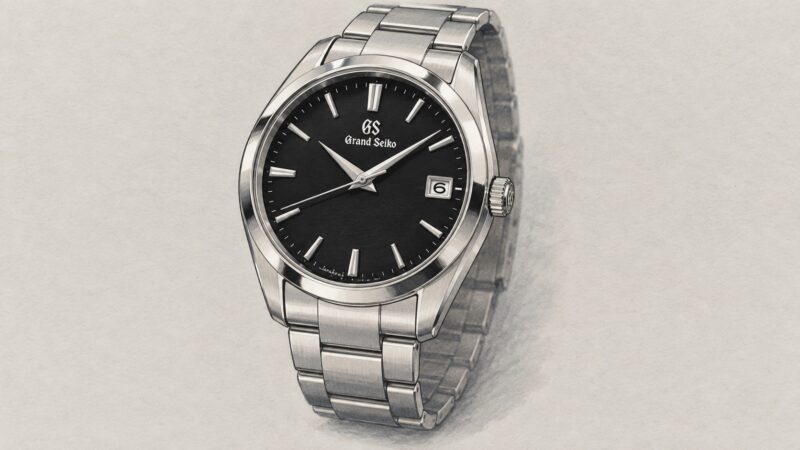
Watch the seconds hand of a Grand Seiko Spring Drive and the first impression is movement without visible steps. The hand travels smoothly around the dial, with a character that differs from both a conventional mechanical sweep and the familiar one-second jump of many quartz watches. The explanation starts with two separate questions: what powers the watch, and what controls its pace?
Spring Drive uses a mainspring for energy and quartz-based electronic regulation for timing. It is neither a battery-powered stepping motor with an ornamental rotor nor a conventional balance-wheel movement with an unusual seconds hand. Its interest lies in the way those two systems work together.
The spring supplies the energy
Winding stores energy in a mainspring. As it unwinds, that energy passes through a gear train to move the hands. In automatic Spring Drive calibres such as the 9R65 and 9R66, a rotor can wind the spring as the watch moves on the wrist, and manual winding is also available. Other Spring Drive calibres are manual-wind designs, so automatic winding is not a universal definition of the technology.
The important point is that the spring remains the power source. There is no conventional battery to replace. Leaving the watch unworn still uses up its reserve, just as leaving an ordinary mechanical watch unworn can. The presence of a quartz oscillator does not make it run indefinitely in a drawer.
The regulator sets the pace
Grand Seiko calls the governing system the Tri-synchro regulator. A rotating glide wheel helps generate the small amount of electricity needed by the quartz oscillator and integrated circuit. The circuit compares the wheel’s rotation with the quartz reference and controls an electromagnetic brake. Mechanical energy drives the hands while electronic regulation keeps that motion at the intended rate.
There is no conventional escapement repeatedly locking and unlocking the gear train. That helps explain the continuous-looking seconds display. The watch is not estimating a smooth animation on a screen: you are looking at a physical hand driven by the movement.
Two useful examples
| Specification | Snowflake SBGA211 | Evolution 9 GMT SBGE285 |
|---|---|---|
| Calibre | 9R65 | 9R66 |
| Winding | Automatic with manual winding | Automatic with manual winding |
| Stated reserve | Approximately 72 hours | Approximately 72 hours |
| Stated accuracy | ±15 seconds per month | ±15 seconds per month |
| Case diameter | 41 mm | 41 mm |
| Main additional displays | Date and power reserve | Date, power reserve and GMT |
| Case material | High-intensity titanium | High-intensity titanium |
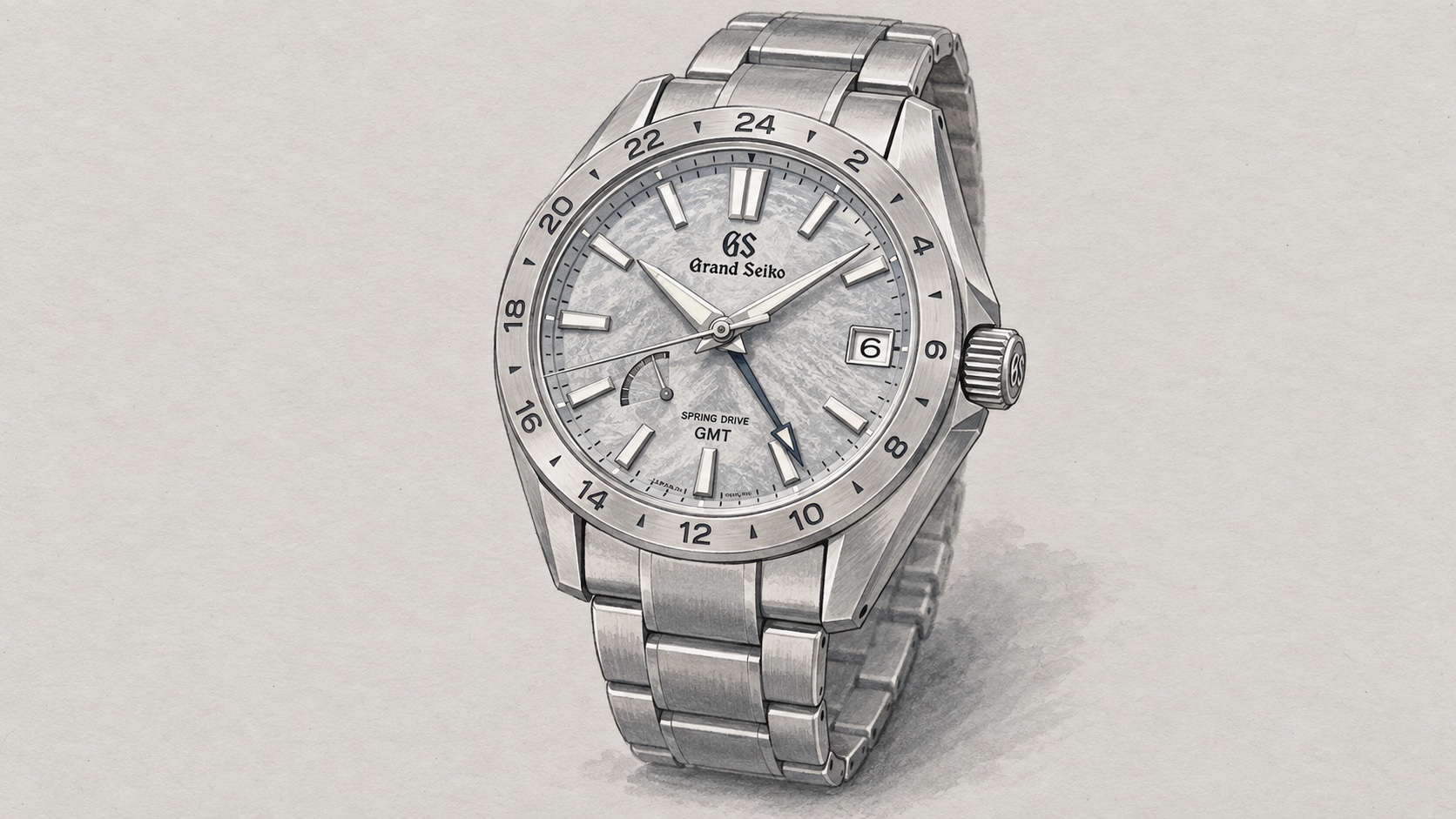
The Snowflake keeps the additional information to a date and power-reserve display, allowing the textured pale dial to dominate. The SBGE285 adds a second time-zone hand and a fixed 24-hour bezel. Both have the same headline reserve and monthly accuracy specification here, but that does not make their displays or wearing proportions interchangeable.
The GMT reference is 13.9 mm thick and 48.3 mm from lug to lug. Those dimensions deserve consideration alongside the technology. A movement you admire still needs a case that suits your wrist, and an additional function only helps if you enjoy reading and setting it.
What the accuracy figure means
A monthly rating describes an allowed rate deviation under the stated conditions. It does not mean the watch automatically receives the correct time or changes itself for British Summer Time. These references do not use a radio signal or phone connection to update the display. You set the time, and the movement aims to maintain it within its specification.
Also avoid applying one calibre’s rating across the whole Spring Drive family. Grand Seiko has developed several generations with different reserves and accuracy standards. The model number and calibre remain the reliable way to establish what a particular watch promises.
A long development, not a styling trick
Seiko’s first commercial Spring Drive watches arrived in 1999 with the manual-wind 7R68. Grand Seiko followed in 2004 with the automatic 9R65. The manufacturer’s development history records earlier patent and research stages, explaining why Spring Drive cannot be reduced to a recent dial effect. Making a spring supply both useful running time and very low-power electronic regulation required sustained engineering work.
Choose Spring Drive if that combination interests you and you like the resulting display. A conventional mechanical watch offers a different rhythm and architecture, while high-accuracy quartz can provide exceptional convenience. The case, dial, servicing arrangements and price still matter. Spring Drive adds a distinctive answer to the question of how a watch keeps time, but the best reference is the one whose complete design you want to wear.
Based on manufacturer information. Specifications and sources checked on 8 September 2026.
Sources: Grand Seiko UK SBGA211 Snowflake; Grand Seiko Spring Drive explanation; Grand Seiko UK SBGE285; Grand Seiko Japan SBGE285 movement history; Grand Seiko calibre 9R66; Grand Seiko Spring Drive mechanism; Grand Seiko Spring Drive development history.
Image: AI-generated editorial illustration of the Grand Seiko SBGE285. Design details are approximate; this is not a product photograph.