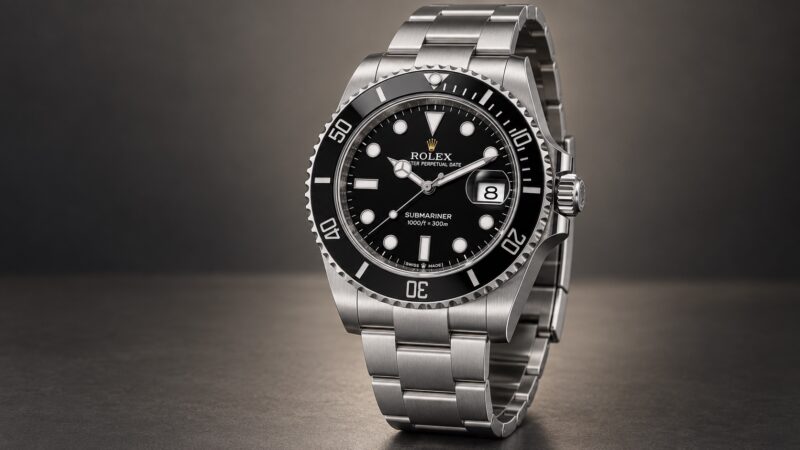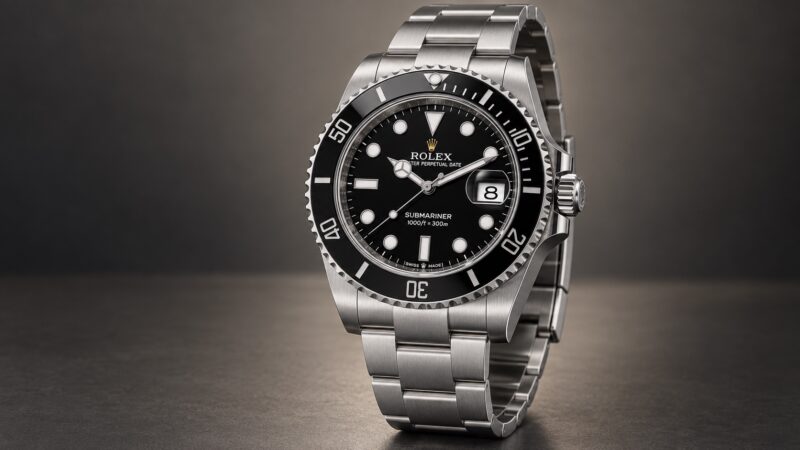
Remove a seconds hand and a watch becomes surprisingly still. Hours and minutes continue to advance, but there is no quick movement to catch your attention. Put seconds in a small subdial and the same information becomes a separate detail. Run the hand from the centre and it travels across the whole face.
These are display choices with practical consequences. They change how easily you can see that a watch is running, how you read short intervals and how much visual space the dial gives to its hands and markers. They do not, on their own, identify the movement as quartz, automatic or manual.
Two hands: the time without a running display
The A. Lange & Söhne Saxonia Thin reference 201.027 shows only hours and minutes. Its 37 mm white-gold case is 5.9 mm thick, and the manual L093.1 movement has a stated 72-hour reserve. There is considerable watchmaking inside even though the face presents very little information.
The absence of a seconds hand does not mean the mechanism stops ticking. Lange specifies a 3Hz frequency for this calibre; its regulating system continues to work whether or not seconds are displayed. What disappears is the immediate visual indication. If you enjoy seeing a watch alive at a glance, that omission may matter more than the minimalist appearance first suggests.
Central seconds: movement across the whole dial
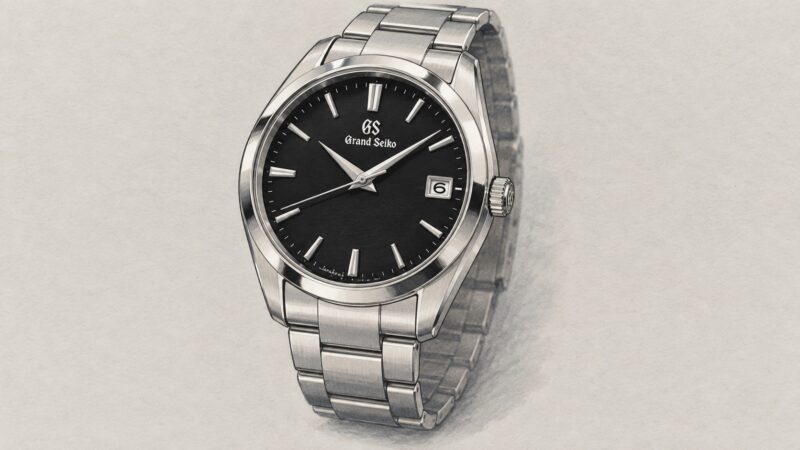
The Grand Seiko SBGW231 uses a slender central seconds hand alongside the hour and minute hands. Its 9S64 movement is manually wound and has an approximately 72-hour reserve. This is a useful correction to the idea that a sweeping central hand implies automatic winding. You can have that display and still wind the watch yourself.
The long hand reaches towards the outer seconds track, allowing a larger reading circle than a small subdial. In design terms, it also moves across the principal dial surface. Whether that adds life or interrupts the calm is a matter of preference, especially on a restrained watch with a wide area of pale dial.
Small seconds: a separate part of the composition
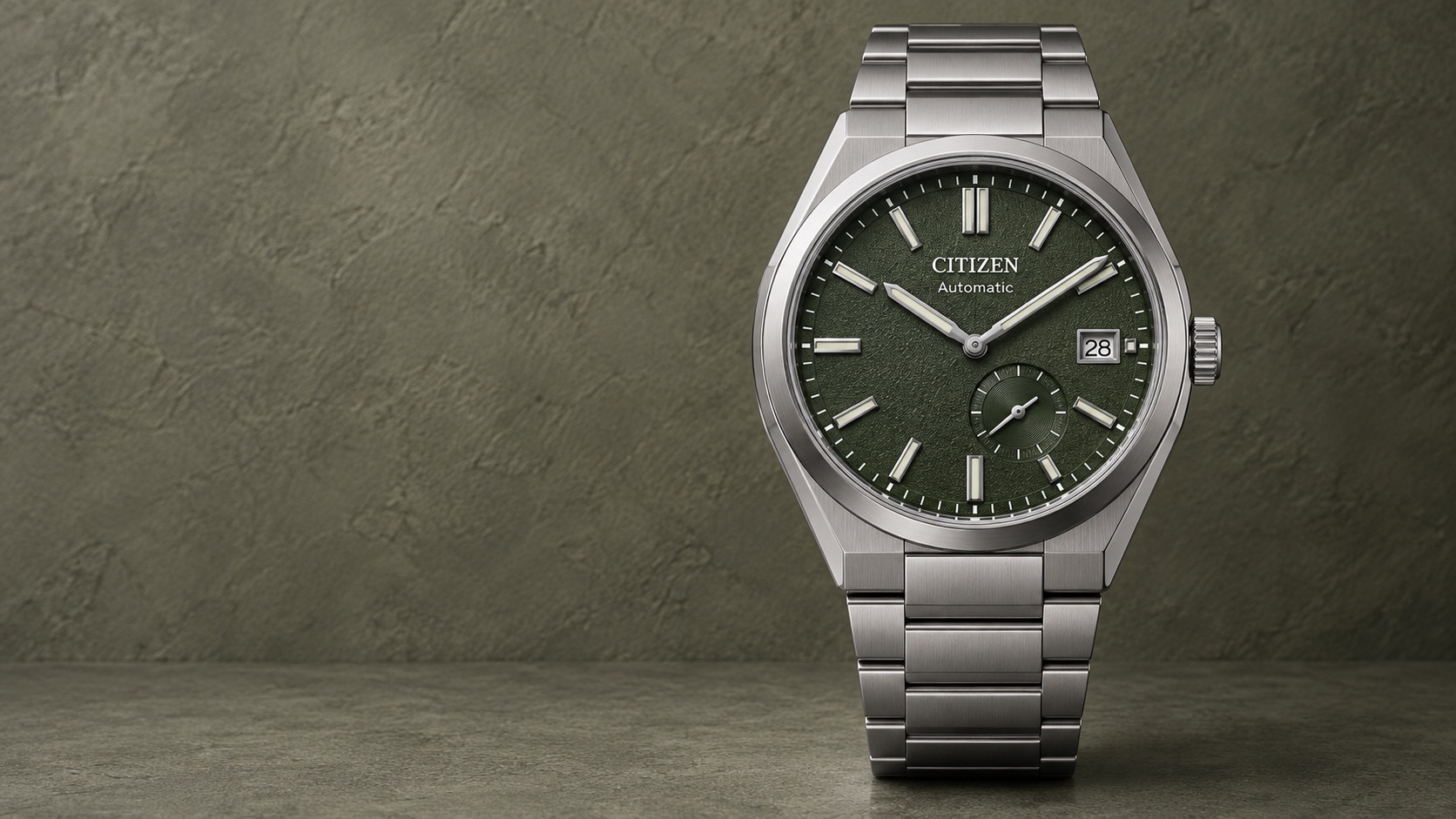
Citizen’s NJ0180-80X puts running seconds in an offset subdial on its green face. The automatic 8213 movement sits inside a 40.5 mm Super Titanium case, with a matching titanium bracelet and a stated weight of 99 g. Small seconds is therefore not restricted to gold dress watches or traditional hand-wound designs.
The position of that subdial makes the Citizen deliberately asymmetric. Some buyers will find it the most interesting part of the face; others will prefer the symmetry of central seconds. It also needs to be large and clear enough for your eyes. A charming detail in a close-up photograph can become less useful at normal reading distance.
| Watch | Seconds layout | Selected specifications |
|---|---|---|
| Lange Saxonia Thin 201.027 | None displayed | 37 mm × 5.9 mm; manual L093.1; 72 hours |
| Grand Seiko SBGW231 | Central seconds | 37.3 mm × 11.6 mm; manual 9S64; 72 hours |
| Citizen NJ0180-80X | Offset small seconds | 40.5 mm × 11 mm; automatic 8213; 10 bar |
A historical detail with a modern setting
Citizen links the small-seconds design of its 2024 Zenshin watches to the first Citizen-named pocket watch of 1924, which also used a separate seconds display. That makes the offset subdial more than an arbitrary way to fill space. A familiar indication has been carried into a very different case material, bracelet and contemporary dial treatment.
The relationship is a design reference, not a claim that the modern automatic is mechanically identical to the pocket watch. This is often the most useful way to read watch history: identify the idea that survived, then examine how the current product changes its setting and function.
Do not confuse small seconds with a stopwatch
A small subdial does not automatically make a watch a chronograph. It may simply show the passing seconds of ordinary time. Conversely, a chronograph’s long central seconds hand may remain parked until the stopwatch is started, while a smaller hand keeps running. The labels and operating instructions tell you which is which.
Nor does one layout promise better accuracy than another. Accuracy depends on the movement and its regulation, not the radius of the hand that displays it. Choose two hands for a composed, largely still face, central seconds for an obvious running indication, or small seconds when you like a separate visual rhythm. The right answer is the display you enjoy reading repeatedly, long after the first close-up has lost its novelty.
Based on manufacturer information. Specifications and sources checked on 8 September 2026.
Sources: Saxonia Thin exact specifications; Saxonia Thin design and movement history; Grand Seiko UK boutique SBGW231; Seiko 2011 introduction of calibre 9S64; Grand Seiko US boutique SBGW231; Citizen Europe: NJ0180-80X; Citizen Singapore: NJ0180-80X; Citizen Zenshin small-seconds history; Citizen: 82xx, 83xx and 41xx movement-family manual.
Image: AI-generated illustration. Fine details may differ from the watch.