Pull the crown to the time-setting position and the seconds hand stops. On a watch with hacking seconds, that pause is intentional. It lets you choose a precise starting point and restart the display in step with a reference time.
The feature is also called stop-seconds. It is easy to appreciate once you have tried to set a watch while its seconds hand keeps moving. What it does not do is improve the movement’s ongoing accuracy simply by being present.
Synchronisation is the purpose
Suppose you want your watch to start a new minute at the same moment as a reliable reference. With stop-seconds, you can pause the seconds hand at a known position, set the hour and minute hands, then return the crown at the appropriate signal.
Seiko’s 4R34 instructions describe pulling the crown to the second click when the seconds hand reaches twelve. The hand stops, and returning the crown restarts it. The detailed date and GMT steps still need to be followed, but the role of the pause is straightforward.
A good initial setting removes one source of mismatch between your watch and the reference. The movement’s own rate then determines how the difference develops while it runs. Starting together and remaining together are separate questions.
Mechanical and quartz watches can both offer it
| Reference | Movement | Relevant feature |
|---|---|---|
| IWC Mark XX IW328201 | 32111 automatic; 120-hour reserve | Central hacking seconds |
| Seiko SSK001K1 | 4R34 automatic GMT; approximately 41 hours | Seconds stop at the time-setting crown position |
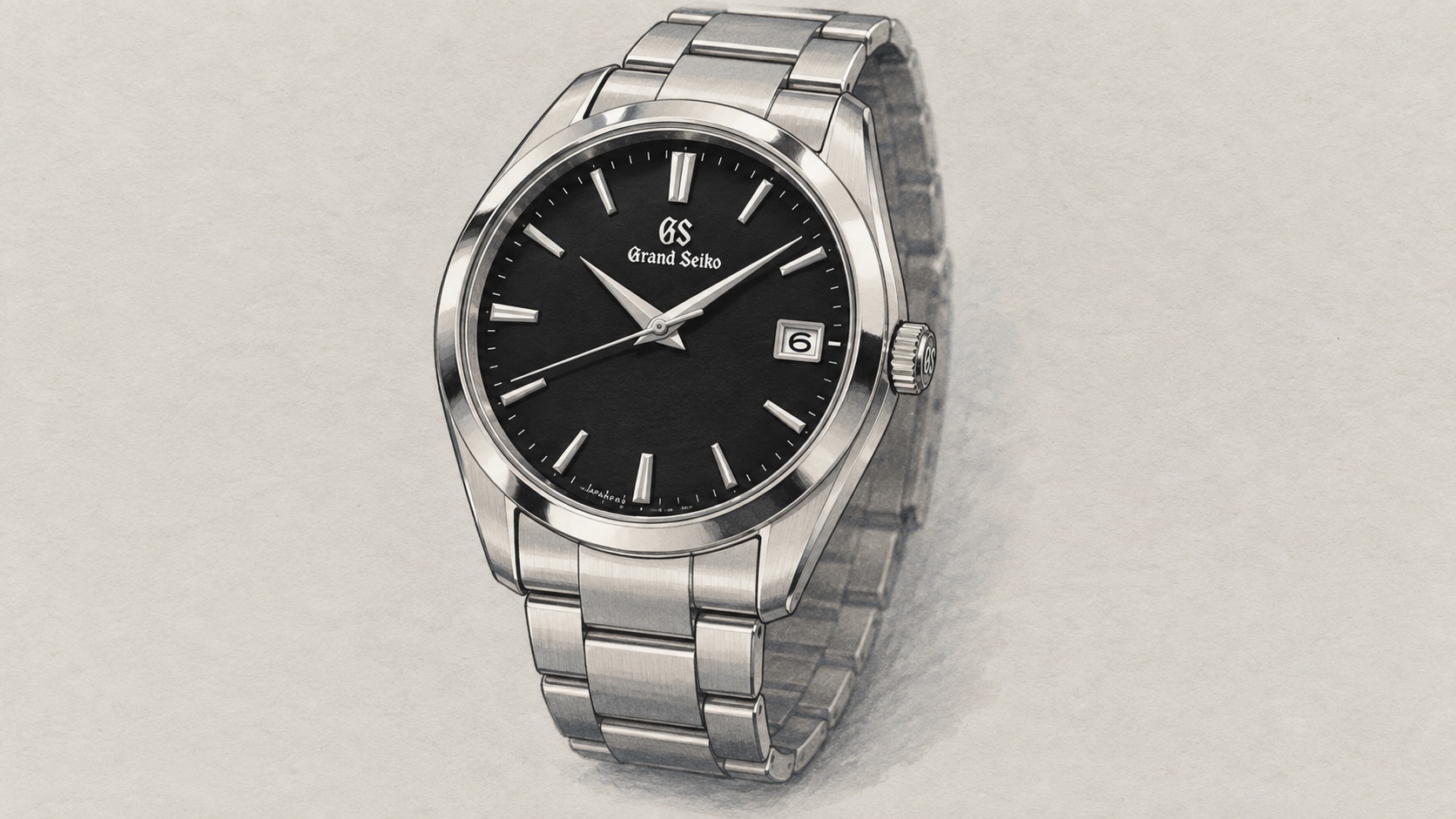
| Grand Seiko SBGP011 | 9F85 quartz; approximately 3-year battery | Hacking plus separate hour adjustment without stopping seconds |
The Grand Seiko is particularly revealing. Its normal time-setting functions include hacking, but its independent hour adjustment is designed to leave the seconds running. That means a time-zone change can preserve the watch’s existing synchronisation.
These are complementary conveniences. One lets you establish the precise setting; the other can avoid disturbing it when only the hour needs changing. The movement description is worth reading beyond the single word quartz.
Why the term appears on pilot and field watches
Clear time displays and coordinated timekeeping have obvious relevance to instruments used in organised work. IWC’s Mark family provides a historical setting for that emphasis. The Mark 11 was developed for the Royal Air Force in 1948 and, according to IWC’s account, remained in service into the 1980s.
The Mark XX arrived in 2022 with a modern automatic movement, a 120-hour reserve and updated case geometry. Its central hacking seconds belong to a contemporary watch built around an easily read time display. The historical connection explains the functional design language without making the current reference identical to the earlier military instrument.
Hacking is not a chronograph
A chronograph measures an elapsed interval while the watch continues showing the time of day. Hacking pauses the ordinary time display as part of setting it. Pulling a crown to stop a watch is therefore not a substitute for a stopwatch function.
If you left the watch paused for ten minutes, its time display would need correcting afterwards. A chronograph’s separate elapsed-time indication is designed to avoid that problem. The two functions serve different tasks even though both involve the word stop.
It is not a certification either
The presence of stop-seconds does not establish COSC or any other chronometer certification. The Seiko’s setting feature and the Grand Seiko’s published plus-or-minus-ten-seconds-per-year specification describe different aspects of their respective movements.
When comparing watches, separate the adjustment facilities, the stated running performance and any testing programme. One specification sheet may provide detailed information in all three areas; another may mention only the functions. Do not fill a missing accuracy claim with an assumption based on the crown’s behaviour.
A useful habit when checking your own watch
If you want to observe timekeeping over several days, begin with a known setting and use the same reference each time you check. Note the elapsed time and the difference instead of judging the watch from a single glance. Stop-seconds helps make the starting point clear.
Follow the exact movement instructions and secure the crown afterwards, particularly where it screws down. Avoid forcing a watch that does not behave as expected. A model without hacking should be set using its own procedure, rather than an improvised technique borrowed from another movement.
For many buyers, hacking is a modest convenience that becomes welcome whenever a watch needs setting. It makes synchronisation easier, while leaving the broader choice of movement, accuracy and design to be judged on their own evidence.
Based on manufacturer information. Specifications and sources checked on 8 September 2026.
Sources: Mark XX exact specifications; Mark XX introduction and Mark 11 origins; IWC Mark design development; Grand Seiko UK boutique SBGP011; Grand Seiko GS9 Club movement history; Grand Seiko 9F85 hacking and independent hour adjustment; Grand Seiko Japan SBGP011; Seiko UK SSK001 specifications; Seiko 2022 GMT launch; Seiko 4R34 instruction manual; Seiko 4R34 stop-seconds setting procedure.
Image: AI-generated editorial illustration of the Grand Seiko SBGP011. Design details are approximate; this is not a product photograph.