If a watch crown will not pull out, the first thing to check is whether it screws down. Many sports watches use a threaded crown that must be unlocked before you can wind the movement or set the time. Trying to pull harder is the wrong response to a feature intended to keep the crown securely in position.
A screw-down crown is part of the watch’s sealing system. Its threads hold the assembly in the intended closed position, while the complete crown, tube and seals contribute to water resistance. The presence of visible threads alone cannot tell you how deep a watch is rated or whether its seals are still healthy.
Unlocking is different from winding
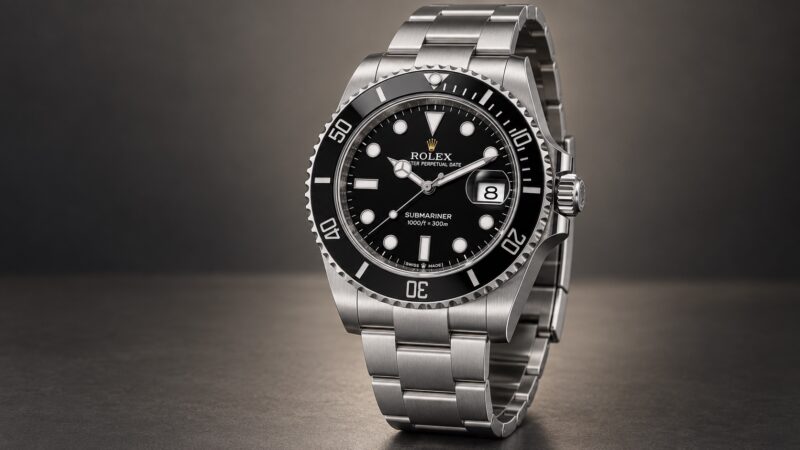
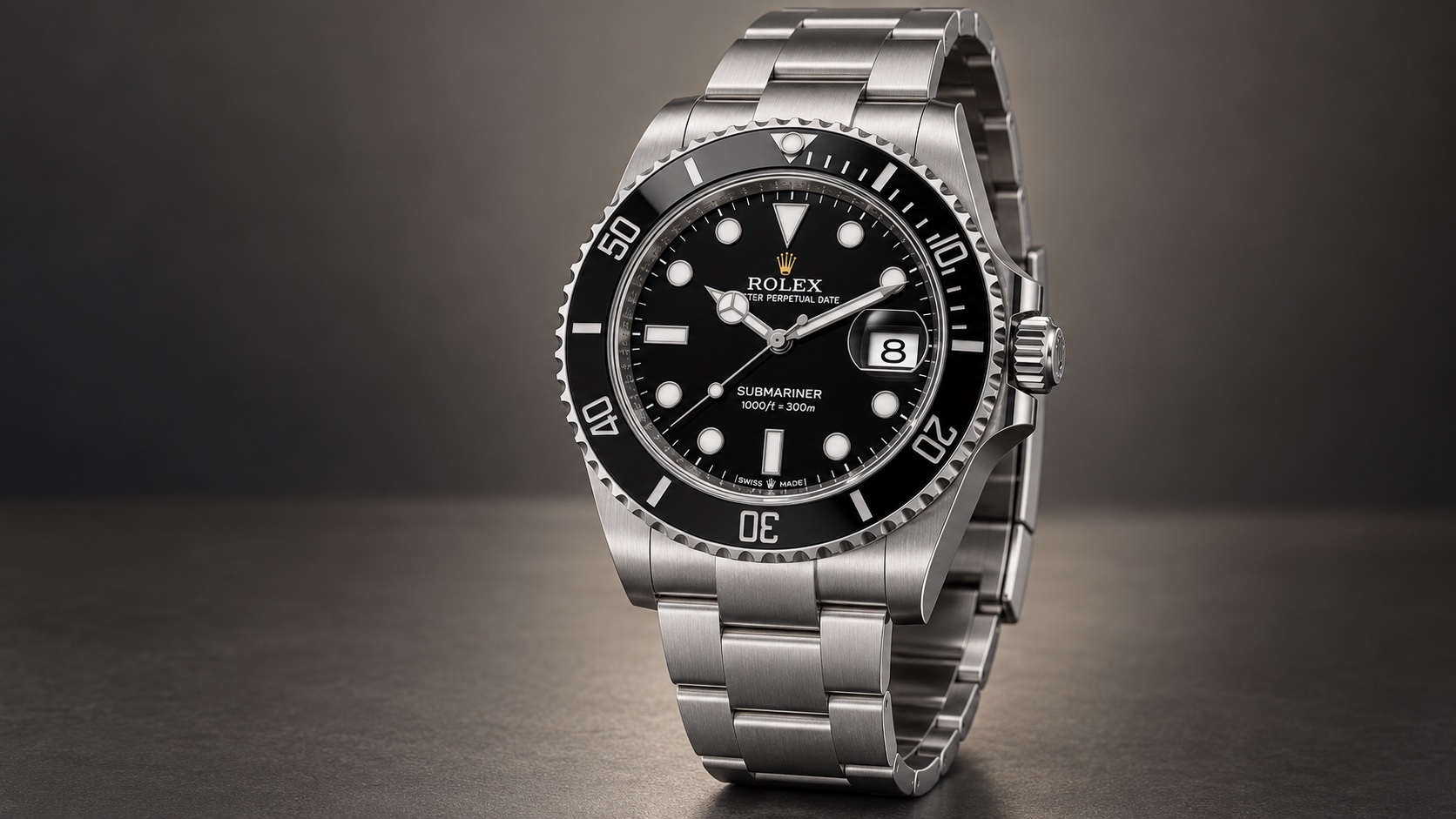
On the Rolex Submariner, the crown is first unscrewed before the winding and setting positions become available. Once released into the appropriate position, clockwise rotation winds the movement. The same physical control performs several jobs, but those jobs depend on its position. Count neither the unlocking turns nor the closing turns as a meaningful measure of the watch’s power reserve.
The date-equipped Submariner also has separate positions for quick date adjustment and time setting. A no-date model has a different sequence of available functions. Even closely related watches therefore deserve their own instructions, especially if you have just moved from one reference to another.
Closing it correctly
Rolex instructs the owner to return the crown to its winding position and use light inward pressure while screwing it clockwise against the case. The key word is light. The crown should engage and close properly without an attempt to overcome a rough, crooked or obstructed thread by force.
If engagement feels wrong, stop and have the watch checked. A crown that refuses to close, feels unusually loose or has suffered an impact needs attention. Tightening harder is not a repair, and a closed-looking crown is not a substitute for a water-resistance test.
Two different watches with the same habit
| Specification | Rolex Submariner Date | Omega Planet Ocean 600M |
|---|---|---|
| Reference | 126610LN | 217.30.42.21.01.003 |
| Case diameter | 41 mm | 42 mm |
| Movement | Automatic 3235 | Automatic 8912 |
| Stated reserve | Approximately 70 hours | 60 hours |
| Water resistance | 300 m | 600 m |
| Date display | At 3, with magnifier | No date on this generation |
| Crown context | Triplock; protective shoulders | Screw-down crown; current fourth-generation case |
The Omega’s higher depth rating cannot be explained simply by saying that its crown screws down. Both watches use that broad approach, while their complete cases have different designs and specifications. The current Planet Ocean reference also omits the separate helium escape valve seen on earlier generations. A familiar model name does not freeze the construction in time.
For an owner, the shared habit is straightforward: make changes with the watch out of the water and secure the controls as the manual requires before water exposure. Rolex specifically says never to unscrew the Submariner crown underwater. Do not treat a screw-down chronograph pusher as interchangeable with a crown; it has a different function and may have separate operating restrictions.
Why this design became familiar
Rolex’s Oyster history dates to 1926, when a sealed case construction helped establish water resistance as a defining feature of the wristwatch. The later Submariner, introduced in 1953, applied the company’s development to a purpose-built diving watch. Today’s crown systems and depth ratings are the result of further evolution, rather than unchanged specifications inherited from those early pieces.
That history helps explain why the screw-down crown became a visual shorthand for a capable sports watch. It also encourages an easy mistake: judging a watch by its silhouette instead of its instructions. Some watches have useful water resistance without a threaded crown, while a neglected threaded crown does not guarantee reliable sealing.
What to check when buying
Operate the crown during a fitting, with the retailer’s guidance. Notice whether it is easy to grip, whether the guards leave enough space and whether you can distinguish the setting positions. Large knurling may look purposeful but still be awkward for your fingers. A watch you use every day benefits from controls you can manage calmly.
For a pre-owned watch, request evidence of the relevant service and water-resistance checks rather than trusting a depth figure printed on an old dial. Crown and tube condition belong in that assessment. A screw-down crown is a useful engineering feature, but ownership is simpler when you understand it as one working part of a complete watch.
Based on manufacturer information. Specifications and sources checked on 8 September 2026.
Sources: Rolex 126610LN specifications; Rolex Submariner timeline; Rolex Submariner collection; Omega current Planet Ocean specifications; Swatch Group fourth-generation launch; Omega London launch follow-up; Omega Seamaster history; Rolex Submariner crown instructions; Rolex Oyster history.
Image: AI-generated editorial illustration of the Rolex Submariner Date 126610LN-0001. Fine dial details and finishing may differ from the production watch.