An 80-hour power reserve can be useful without making an 80-hour watch the right choice for everyone. If you wear the same automatic every day, you may rarely use the full reserve. If you switch watches on Friday evening, the difference between a short reserve and several days of running time can be much more noticeable.
Power reserve describes how long a watch can keep running on its stored energy under the conditions specified by its maker. For a mechanical watch, that energy is held in the mainspring. The headline number normally assumes a sufficiently wound movement. It is capacity, not a reading of how much energy your watch currently has.
Capacity and current charge are different questions
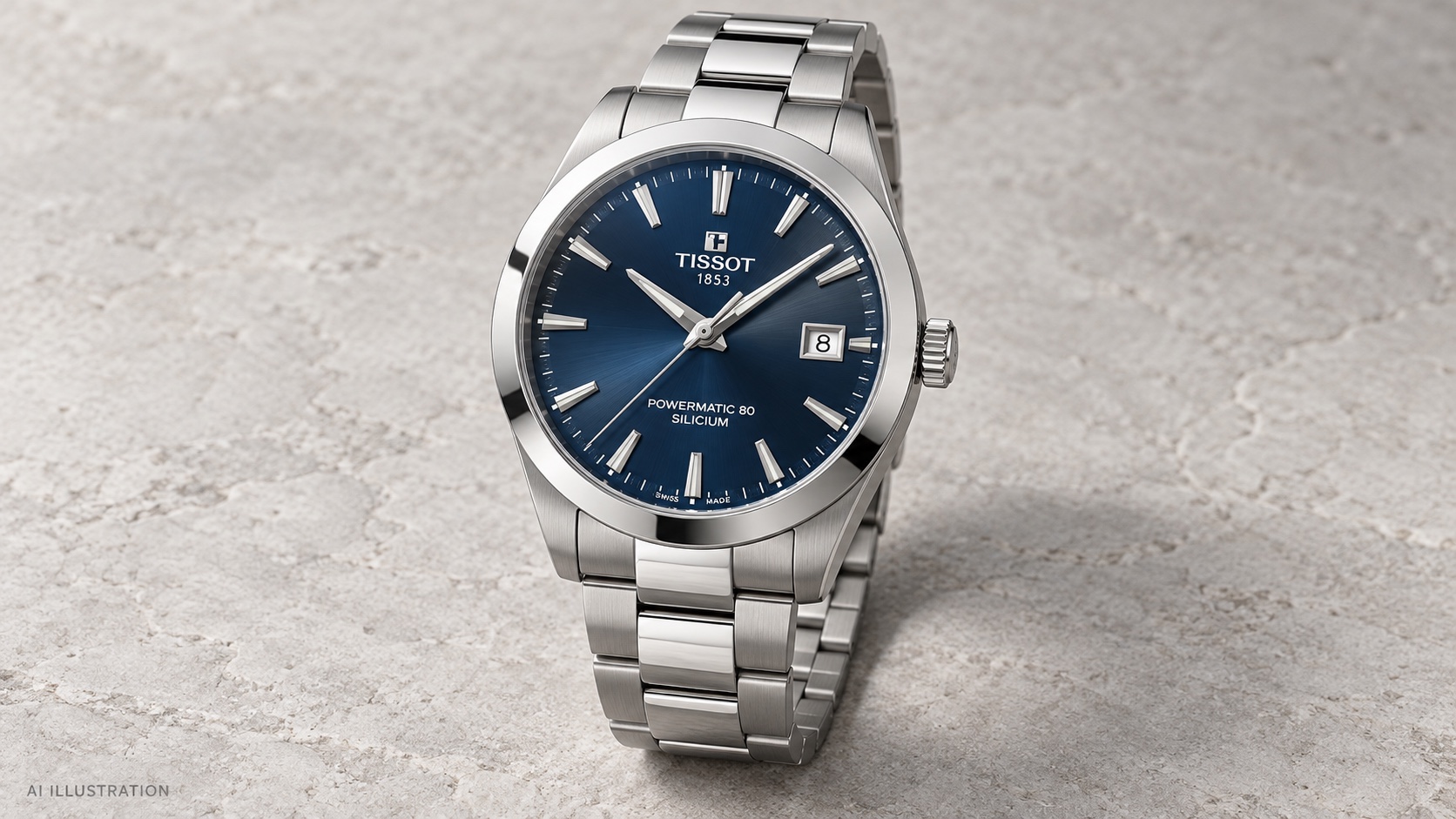
A Tissot Gentleman with an advertised reserve of up to 80 hours does not automatically have 80 hours remaining when you take it off. Its actual starting state depends on how much energy has been put into the movement. An automatic can gather energy through wearing, but a short or quiet period on the wrist may leave it below full reserve.
A useful analogy is a container with a stated capacity. Knowing its maximum size does not tell you how full it is today. A power-reserve indicator, where fitted, gives information about the remaining energy. A published reserve figure on a product page describes the movement’s potential running time.
Three watches, two ways of adding energy
| Watch | Movement and winding | Stated reserve |
|---|---|---|
| Tissot Gentleman T127.407.11.041.00 | Powermatic 80 automatic | Up to 80 hours |
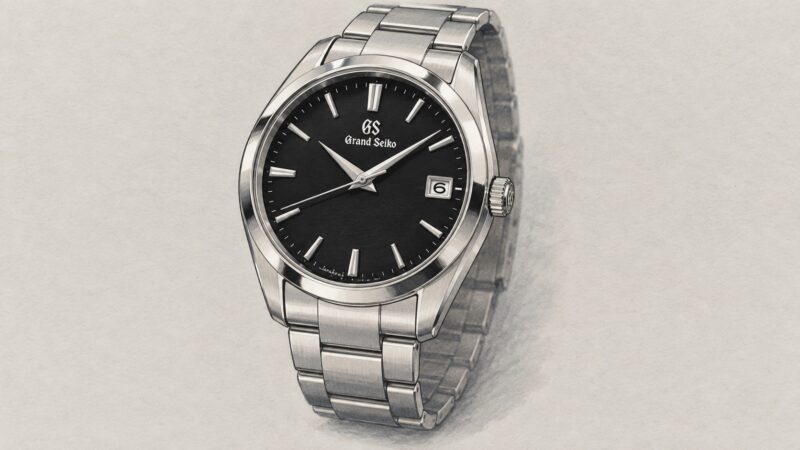
| Grand Seiko SBGW231 | 9S64 manual winding | Approximately 72 hours |
| Seiko SPB453J1 | 6R55 automatic with manual winding | Approximately 72 hours |
The manual Grand Seiko and automatic Seiko share a similar quoted duration. That does not make their ownership identical. The Grand Seiko needs energy through the crown; the Seiko can replenish its reserve through wear as well. Reserve tells you how long the stored energy can last, while the winding system tells you how the watch receives it.
Why modern watches advertise several days
The Seiko SPB453 provides a useful piece of development history. Its 2024 generation of the 1965-inspired Heritage Diver introduced the 6R55 with an approximately 72-hour reserve. Seiko presented the longer running time alongside changes to the case, bracelet and diver specification. A familiar-looking watch had been revised in ways that could affect ordinary ownership.
That is the right context for a reserve improvement. It is one part of a watch’s development, and its value depends on use. A buyer who rotates between a weekday watch and a weekend watch has a clear reason to welcome extra running time. A buyer who never takes the watch off may care more about the other changes in the same generation.
Think in gaps between wearing sessions
Imagine taking off a fully wound watch at 6 pm on Friday and returning to it at 8 am on Monday. That is 62 hours. A stated 72-hour reserve can cover that interval in principle, with 10 hours of margin. An 80-hour reserve provides 18 hours of margin. The calculation explains the appeal without pretending your particular watch always begins the weekend fully wound.
Now imagine leaving the watch until the following Friday. Neither 72 nor 80 hours covers a week. If your rotation regularly involves gaps of that length, you should expect to restart the watch. Paying more for a small reserve increase will not remove the task you are trying to avoid.
It is also worth considering the calendar. Restarting a simple no-date watch and restarting a watch with additional displays can involve different amounts of setting. A reserve figure alone does not capture that part of the ownership experience.
More reserve does not mean greater accuracy
Running time and timekeeping rate are separate specifications. The SPB453’s 72-hour reserve sits alongside Seiko’s published 6R55 accuracy range of minus 15 to plus 25 seconds per day. Extending reserve does not turn that movement into a different accuracy category.
When comparing watches, keep those rows separate. One may run longer without being worn; another may have a tighter stated timing range. A third may offer a clearer dial or a case shape you prefer. Treating reserve as an overall score hides the reasons you might choose each one.
What to ask before buying
Ask how the maker recommends starting the exact movement, whether the watch has a reserve indicator, and what the published duration assumes. Use the operating instructions for winding rather than applying a turn count remembered from another calibre. The practical details matter most when you are new to mechanical watches.
Then compare the reserve with your actual wearing pattern. Around three days can be useful for a short rotation. A longer reserve may matter if your gaps are longer. If the watch will spend weeks in a drawer between outings, instant readiness may be better addressed by a different movement type than by a modest mechanical reserve increase.
Choose extra reserve when it solves a real gap in your routine. Otherwise, regard it as a useful supporting feature and let the design, dimensions and movement character carry more of the buying decision.
Based on manufacturer information. Specifications and sources checked on 8 September 2026.
Sources: Tissot Gentleman specifications; Tissot history; Tissot on the Gentleman’s 1960s inspiration; Grand Seiko UK boutique SBGW231; Seiko 2011 introduction of calibre 9S64; Grand Seiko US boutique SBGW231; Seiko UK SPB453 specifications; Seiko on the 2024 Heritage Diver and 6R55 development; Seiko original 1965 diver specifications and history.
Image: AI-generated editorial illustration of the Tissot Gentleman Powermatic 80, reference T127.407.11.041.00. Fine design details may differ from the production watch.