A scratch across the glass can become the first thing you notice every time you check your watch. That is why sapphire matters to many buyers. Its attraction is straightforward: greater resistance to everyday scratching than mineral glass. It is a useful advantage, although the word sapphire does not tell you everything about the watch around it.
The crystal is the transparent cover over the dial. Mineral glass, Seiko’s Hardlex and synthetic sapphire appear across watches at different prices. To judge their importance, look at the crystal together with the design, movement and intended job of the watch, rather than using one material as a complete quality score.
What the terms mean
Mineral crystal is glass used as the protective dial covering. Hardlex is Seiko’s hardened mineral glass. It belongs in that family, even though the proprietary name can make it sound like a separate alternative to both glass and sapphire.
Sapphire in a watch specification is a manufactured crystal, not a gemstone taken from the ground and cut into a watch window. The reason to seek it is its scratch resistance. Seiko’s own materials guidance describes sapphire as more resistant to scratching than its hardened mineral glass.
That comparison concerns scratching. It does not mean a sapphire watch can be dropped without consequence, or that its case, bezel and bracelet share the crystal’s properties. A hard transparent surface does not protect the rest of the watch from every kind of damage.
Four watches put the choice in context
| Reference | Crystal | Other useful specifications |
|---|---|---|
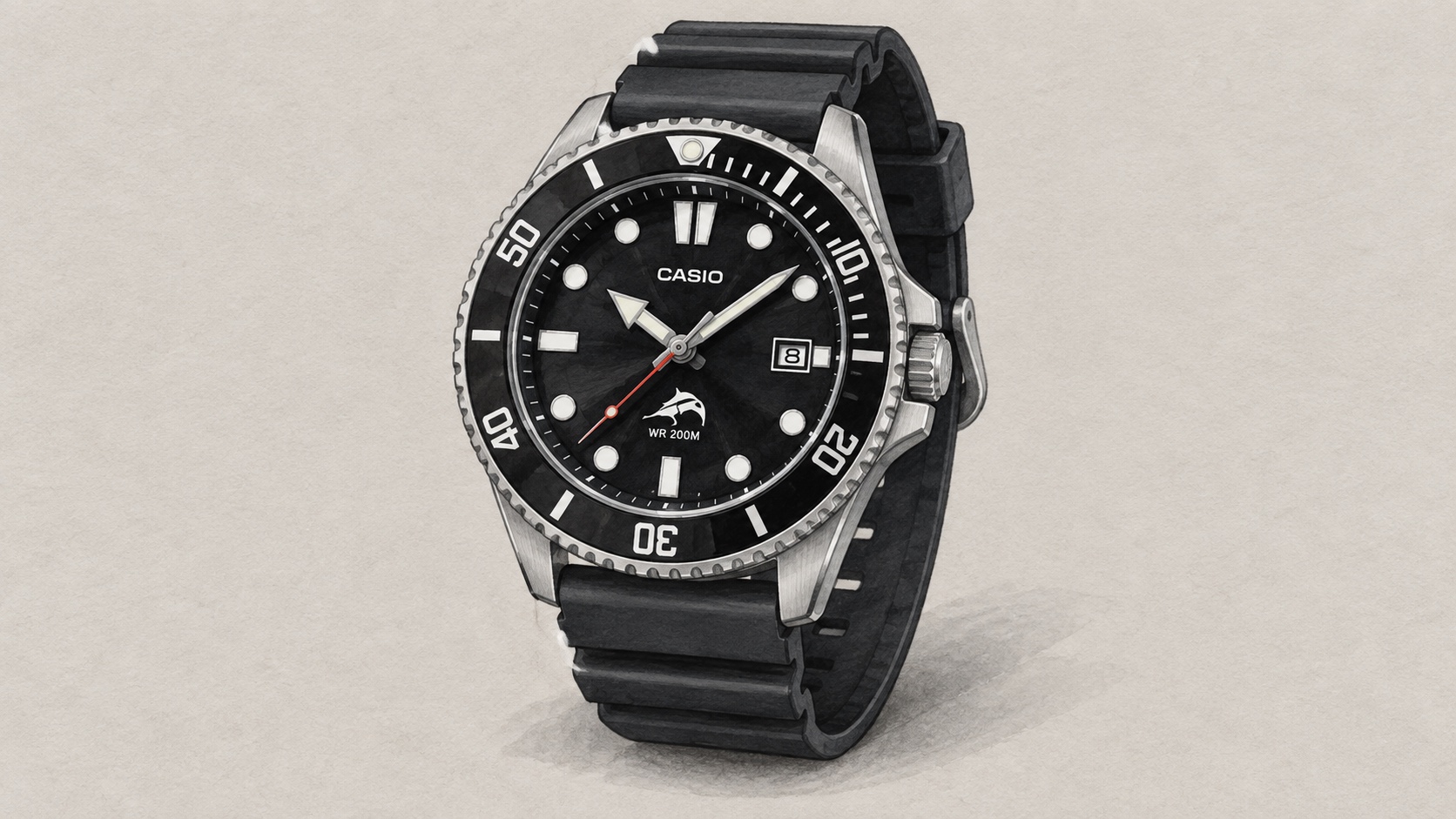
| Casio MDV-106-1AV | Mineral | 44.2 mm wide; quartz; 200 m rating |
| Seiko SSK001K1 | Hardlex with magnifier | 42.5 mm; automatic GMT; 41-hour reserve |
| Seiko SPB453J1 | Curved sapphire; internal anti-reflective coating | 40 mm; 6R55 automatic; 72-hour reserve |
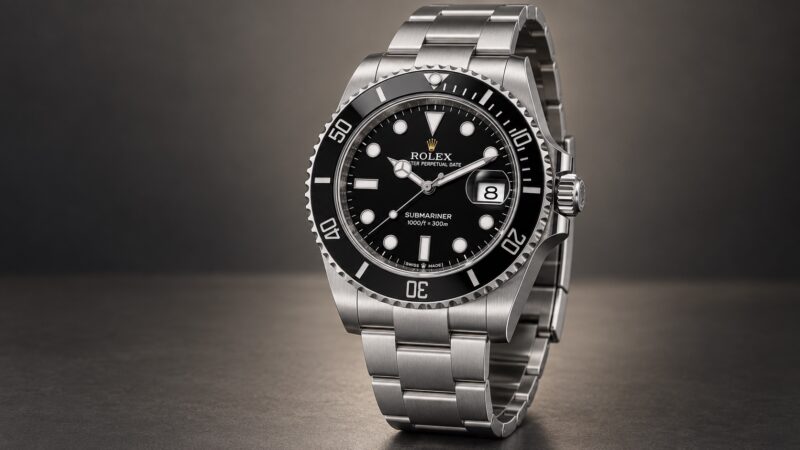
| Rolex Submariner Date 126610LN-0001 | Sapphire with Cyclops | 41 mm; 3235 automatic; approximately 70 hours |
The Casio pairs mineral glass with a battery-powered movement and a large steel case. The Seiko GMT combines Hardlex with an extra time-zone hand and a mechanical movement. Moving to the SPB453 changes much more than the glass: the case dimensions, movement, reserve and diving specification change too.
For that reason, the price gap between two watches cannot reasonably be described as the cost of sapphire alone. It may include a different bracelet, construction, movement or level of finishing. Compare whole watches first, then decide how much the crystal matters within the choices that suit you.
Shape and reflections deserve their own attention
The SPB453’s specification describes both curved sapphire and an anti-reflective coating on the inside. Those are separate details. Curvature influences the shape of the window over the dial; an anti-reflective treatment addresses reflections. The word sapphire by itself does not establish either characteristic.
A date magnifier adds another distinction. The SSK001 has one over its date display, while the Rolex uses its Cyclops lens. A buyer can like the enlarged numeral or prefer an uninterrupted crystal. That is a question of display and appearance, independent of whether the main crystal is mineral or sapphire.
When viewing photographs, examine the watch at an angle as well as straight on. A dramatically domed cover can be a central part of a design. A flatter crystal can make a different impression, particularly on a watch with a broad bezel. Material and shape should be read as two specifications.
Old design ideas, current construction
The Seiko SPB453 belongs to the modern line inspired by the company’s 1965 diving watch. The current generation arrived in 2024 with a 40 mm case, a three-day reserve and a 300 m diving rating. Its appeal comes partly from that historical outline, but its present specification belongs to the contemporary reference.
This is a useful way to approach heritage watches. A design can recall an earlier period while using current components and different dimensions. Looking vintage does not tell you the crystal material. Read the modern reference sheet before assuming that a retro dial comes with period construction or that a familiar silhouette has stayed technically unchanged.
Should sapphire decide the purchase?
Give sapphire substantial weight if you want to keep a frequently worn watch’s viewing surface clear and the other differences between your shortlisted watches are small. It is an understandable preference for something you will glance at many times each day.
Keep mineral glass in consideration when a particular watch offers the size, display and movement you actually want. The Casio’s simple quartz ownership and the Seiko’s accessible GMT function remain relevant advantages even though their crystals differ from the more expensive examples.
For a used purchase, inspect the actual glass rather than assuming the specification describes its current condition. Ask whether it has been replaced and whether the replacement matches the original. A clean, correctly specified crystal is more informative than a listing that merely repeats the word sapphire.
Choose the complete watch you want to own. Sapphire can be an excellent reason to prefer one otherwise suitable option, but the strongest purchase still balances the crystal with proportions, functions and the way you will use the watch.
Based on manufacturer information. Specifications and sources checked on 8 September 2026.
Sources: Casio Canada MDV-106-1AV specifications; Casio Japan MDV-107 family development; Casio water-resistance use guidance; Seiko UK SSK001 specifications; Seiko 2022 GMT launch; Seiko 4R34 instruction manual; Seiko UK SPB453 specifications; Seiko 1965 Heritage Diver development; Seiko original 1965 diver specifications and history; Rolex 126610LN specifications; Rolex Submariner timeline; Rolex Submariner collection; Seiko materials and crystal guidance; Seiko UK Hardlex description.
Image: AI-generated editorial illustration of the Casio MDV-106-1AV. Design details are approximate; this is not a product photograph.