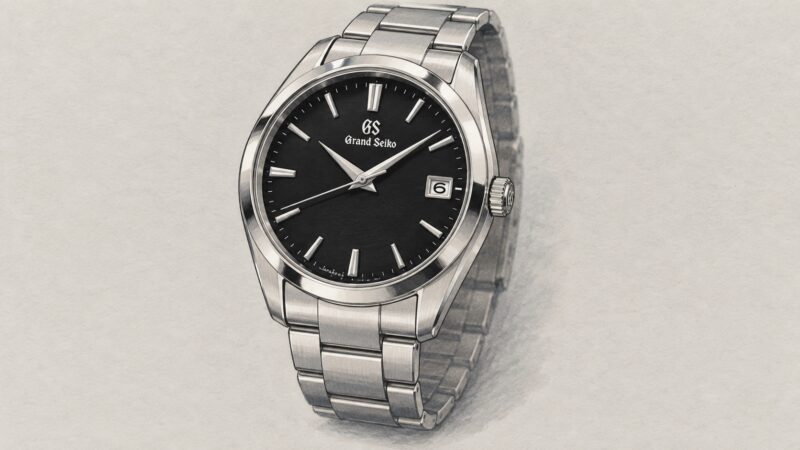
A dive watch’s depth rating looks like an easy way to rank its engineering. The largest number wins. Yet a 300-metre Fifty Fathoms, a 600-metre Planet Ocean and a 1,200-metre SUB 300T do not form a simple ladder of everyday usefulness. Their cases reflect different decisions about construction, specialist equipment, dimensions and identity.
The historical story becomes clearer when it is divided into two questions. How does a watch keep water out under pressure? And how does it release gas that has entered during a very particular kind of professional diving? A helium valve answers the second question. It does not explain the whole first one.
The seal was a system, not a single stronger part
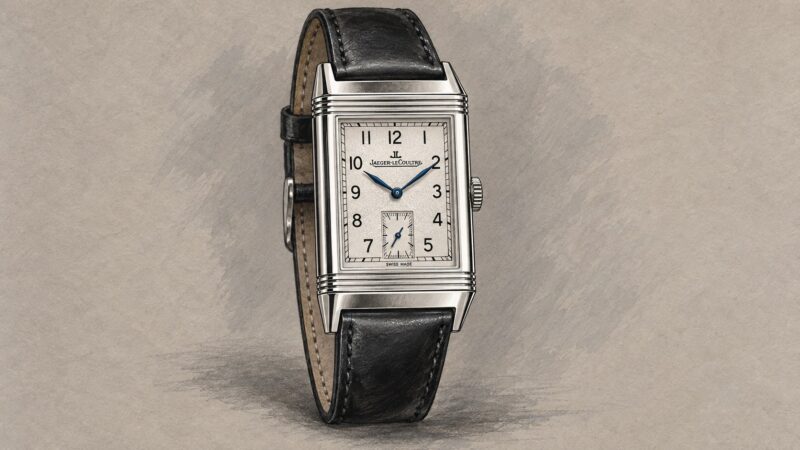
Blancpain’s account of the 1953 Fifty Fathoms describes several related measures. The crown used a double watertight seal, while the caseback arrangement prevented the sealing O-ring from distorting during assembly. These solutions were patented alongside the locking rotating bezel. The self-winding movement also reduced the need to operate the crown compared with a hand-wound watch, limiting wear on its gaskets.
That combination matters more than a heroic story about a thick crystal. A case has several boundaries, and a watch must still be assembled, set and maintained. The original problem was to make a readable instrument whose seals could survive its intended use, rather than merely to print an ambitious number on the dial.
The modern Fifty Fathoms keeps this family identity while using different components. Reference 5010 1130 NABA has a 300-metre rating and the automatic 1315, with a 120-hour reserve. Its sapphire bezel insert belongs to a later chapter: Blancpain dates its introduction to 2003. Treating every contemporary feature as part of the 1953 original would hide the intervening development.
Helium introduced a pressure problem inside the watch
DOXA’s explanation of saturation diving describes helium entering a watch while the diver occupies a pressurised environment containing a helium-rich breathing mixture. During decompression, a pressure difference can develop as the surrounding pressure falls. The release valve provides a controlled route for that gas to escape, protecting the watch from internal pressure.
This is distinct from a conventional water seal resisting pressure from outside. It also explains why a helium valve is a specialist feature rather than a universal requirement for swimming or recreational use. Its presence tells you about one operating scenario; its absence does not, by itself, tell you that a watch has a low depth rating.
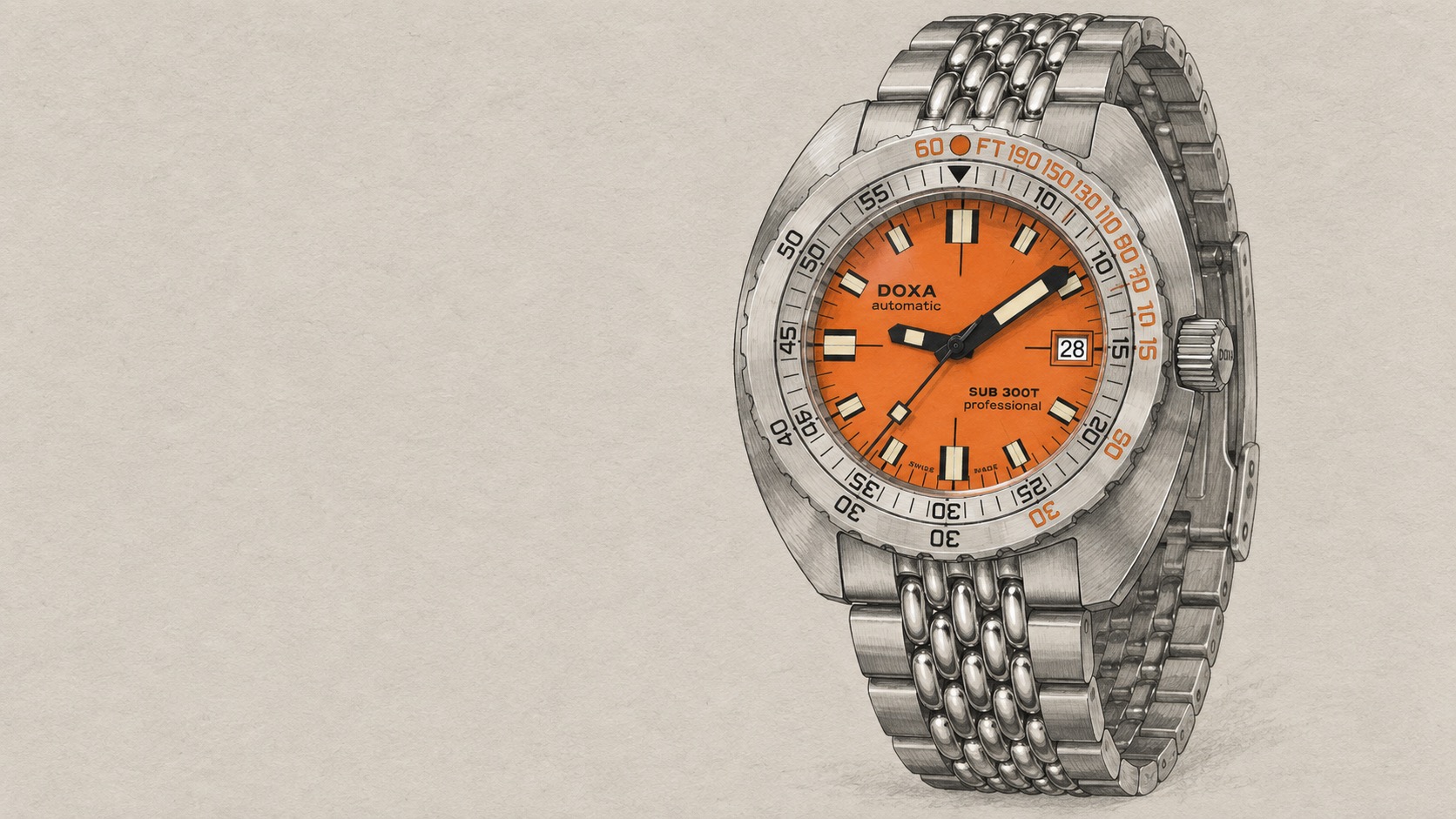
The SUB 300T carries this professional-diving identity into its present form. Its lineage includes the valve-equipped Conquistador of the late 1960s. The modern 840.10.351.10 combines a release valve with a separate 120-bar water-resistance specification, preserving two responses to different pressure problems in the same case.
The current watches do not rank neatly by bulk
| Modern watch and reference | Diameter × thickness | Published water resistance | Relevant construction or equipment |
|---|---|---|---|
| Omega Planet Ocean 217.30.42.21.01.003 | 42 × 13.79 mm | 600 metres | Titanium inner ring and caseback; no helium valve |
| Blancpain Fifty Fathoms 5010 1130 NABA | 42.3 × 14.3 mm | 300 metres | Steel case; sapphire bezel insert; automatic 1315 |
| DOXA SUB 300T Professional 840.10.351.10 | 42.5 × 13.65 mm | 1,200 metres / 120 bar | Steel case; helium release valve; screw-down crown |
These dimensions illustrate why case engineering deserves a closer look. In this group the watch with the highest depth rating is not the thickest. That does not prove that one manufacturer has defeated the others. Crystal shape, movement, case architecture and design priorities all contribute to the finished object. A small table cannot isolate their individual effects.
The DOXA is 44.5 mm from lug to lug, uses a 38-hour automatic movement and carries its familiar dual-scale bezel. The Blancpain pairs a longer reserve with a domed sapphire bezel insert. These are ownership and design differences that the water-resistance number leaves out.
Planet Ocean’s latest chapter removes the valve
Omega introduced Planet Ocean in 2005. Its fourth generation, launched in 2025, revisited the case rather than merely changing the dial. Omega describes a two-part structure incorporating an inner titanium ring, a titanium screw-in caseback and a flat sapphire crystal. The new 42 mm watch is 13.79 mm thick and dispenses with the helium escape valve associated with the earlier generations.
Reference 217.30.42.21.01.003 nevertheless retains a 600-metre rating. Its automatic 8912 has a 60-hour reserve, and its bracelet includes adjustment and a diver extension. This is an especially useful example of why a family name, an old photograph and a remembered specification can point to different watches. The current orange-bezel model should be judged from its own construction.
What the history changes when choosing a watch
For an owner choosing among these designs, the depth rating is one specification to understand alongside the instructions for the exact reference. It does not describe the condition of a used watch’s seals, promise that every crown operation is safe underwater, or replace the separate equipment and training required for diving.
The more interesting choice is whether the overall watch suits its intended life. Compare the case dimensions, readability, adjustment, movement reserve and maintenance arrangements. Buy the DOXA because its particular package appeals, not because 1,200 must be four times as useful as 300. Appreciate the Fifty Fathoms’ sealing history without assuming it froze in 1953. And recognise the latest Planet Ocean as a deliberate new case design whose missing valve is part of its specification, rather than a mistaken omission.
Based on manufacturer information. Specifications checked on 8 September 2026.
Sources: Omega current Planet Ocean specifications; Swatch Group fourth-generation launch; Fifty Fathoms exact reference; 2025 steel model and calibre history; Fifty Fathoms sapphire bezel and finishing; DOXA UK SUB 300T Professional 840.10.351.10; DOXA official history; Blancpain: 1953 crown seals, caseback sealing and self-winding; DOXA: helium release valve operation and earlier historical account.
Image: AI-generated editorial illustration of DOXA 840.10.351.10. Design details are approximate; this is not a product photograph.