A solar watch can look like an ordinary analogue watch because the useful part of its technology is largely hidden. Light supplies energy, a rechargeable cell stores it, and the watch can continue running after the lights go out. You do not need to keep it in sunshine every minute you wear it.
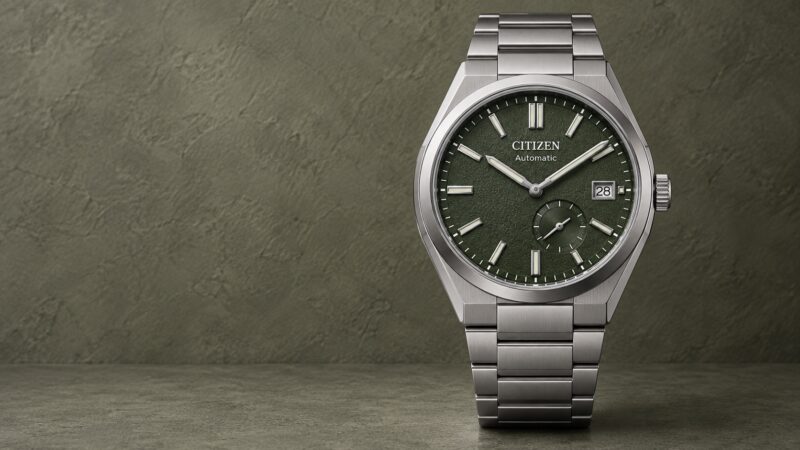
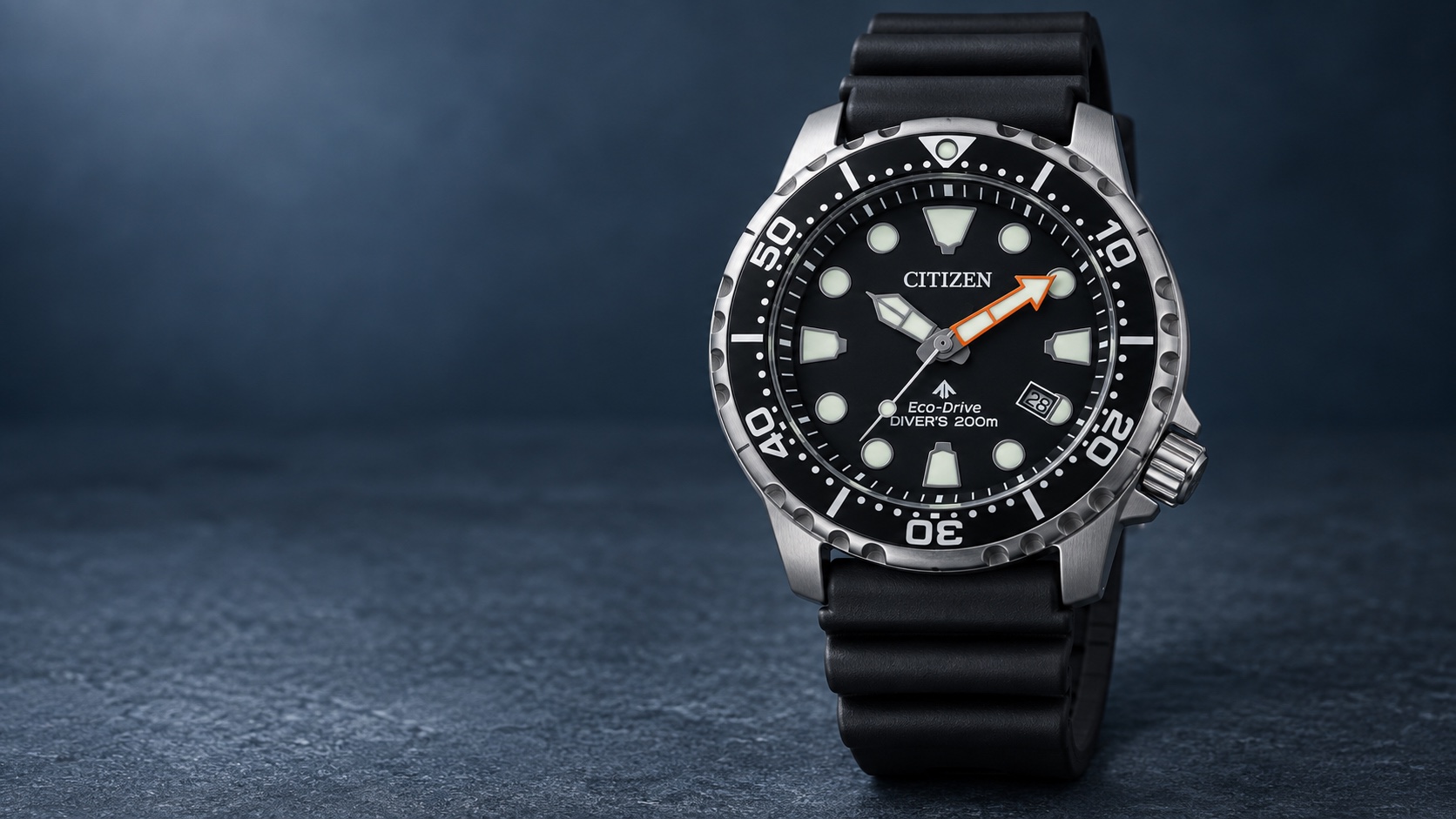
The attraction is a watch that can remain ready with a regular supply of light, without the recurring battery-change routine of a conventional disposable-cell quartz watch. Citizen’s Promaster BN0150 and Zenshin CA4610 show how the same broad idea can suit very different designs: a black-strap diver and a titanium bracelet chronograph.
Follow the energy from light to hands
Citizen describes Eco-Drive as a system that converts light into electrical energy. That energy charges a storage cell and powers the watch. In an analogue design, the movement uses electrical power to operate the motor that moves the hands. Stored energy is the reason the watch can keep time through a dark night or time away from the wrist.
Solar is therefore a description of the energy source, not a dial style. A light-powered watch can have hands, a digital display or a mixture of the two. Nor does solar automatically mean connected. A watch can recharge from light without receiving radio signals, using GPS or connecting to a phone.
A technology with roots in the 1970s
Citizen released the Crystron Solar Cell in 1976, following a prototype in 1974. The company identifies it as the first light-powered analogue watch. Its historical account also describes the practical difficulties: early solar cells were thick and fragile, and the storage batteries and generating performance needed substantial development.
That history helps explain the significance of today’s designs. The technology became useful when it could support an ordinary watch throughout ordinary ownership, not just demonstrate that a solar cell could move hands. Current Eco-Drive watches can hide that engineering behind a conventional-looking dial and offer months of stored running time. The result is less visually dramatic than an exposed mechanism, but it changes how often an owner needs to think about power.
Two Citizen examples
| Feature | Promaster BN0150-10E | Zenshin CA4610-85A |
|---|---|---|
| Movement | E168 Eco-Drive quartz | B620 Eco-Drive chronograph |
| Published diameter | 44 mm | 42.5 mm in Citizen Europe listing |
| Crystal | Mineral | Sapphire |
| Case and band | Steel; polyurethane strap | Super Titanium case and bracelet |
| Stored running time | Approximately six months | Approximately nine months under stated use conditions |
The Promaster uses its light-powered movement in a straightforward diving layout. The Zenshin adds elapsed-time timing and a more intricate dial. Citizen’s nine-month figure for the B620 assumes chronograph use for one hour daily. That condition belongs with the reserve figure; it should not disappear when the number is repeated in a comparison.
Indoor light works, but the amount of light matters
Eco-Drive is designed to use artificial light as well as sunlight. That does not mean every lighting situation replenishes energy equally quickly. The exact movement’s charging guide gives the useful detail, including the difference between recovering basic operation and reaching a full charge.
For an owner, the simplest useful habit is to let the dial receive light regularly. A watch kept under a sleeve all day and in a closed box afterwards has a different energy supply from one that is routinely exposed. If it has stopped after prolonged dark storage, look up the correct charging instructions before assuming that the movement has failed.
Charge according to the maker’s guidance and avoid improvised methods that expose the watch to excessive heat. A charging problem calls for the correct instructions, not a guess about how long any solar watch should sit beneath any lamp.
What the reserve figure does and does not promise
Six months of running time describes a fully charged watch under the stated conditions. It does not mean a watch that has spent months in a dark cupboard still has six months remaining when you find it. As with a mechanical reserve, maximum capacity and the energy currently stored are different things.
Some light-powered watches have power-saving functions or low-charge indications. The details vary by calibre, so do not transfer a behaviour from one Citizen or Casio to another. A seconds hand behaving unusually may be a documented indication, but the manual should establish what it means for that particular movement.
Does solar mean no maintenance?
Light-powered charging removes the normal routine of replacing a disposable battery at regular intervals. It does not make every other component of the watch maintenance-free. Seals, crowns, straps and bracelets still belong to the ownership picture, and an ageing or damaged watch may need professional attention.
The technology is most persuasive when you want an analogue watch that is easy to leave ready. Choose the Promaster if its dive-watch layout and strap suit the job. Choose the Zenshin if you want a titanium bracelet chronograph. In either case, the useful common feature is an energy system that can fit naturally into daily wear, provided the dial receives enough light.
Based on manufacturer information. Specifications and sources checked on 8 September 2026.
Sources: Citizen Europe: BN0150-10E; Citizen Italy: BN0150-10E; Citizen: technology and Promaster history; Citizen: E16 movement-family manual; Citizen Europe: CA4610-85A; Citizen UK: CA4610-85A; Citizen: Zenshin 2024 introduction; Citizen: Eco-Drive 50 years of innovation; Citizen: B620 instruction manual; Citizen Eco-Drive technology and development history; Citizen on light conversion and stored energy.
Image: AI-generated illustration. Fine details may differ from the watch.