A tachymeter looks complicated because its numbers run in the wrong direction. The scale gets smaller as you move clockwise, and it often starts far above any sensible road speed. Once you understand what it measures, that arrangement makes sense: the less time one task takes, the more often you could complete it in an hour.
The scale converts elapsed seconds into a rate per hour. It does not know your location, measure distance or track your speed continuously. You supply a known distance or a repeatable task, and the chronograph supplies the time. That distinction makes a decorative-looking ring surprisingly useful.
Start with one measured unit
Imagine watching a timed vehicle demonstration from a safe observation point. If a vehicle covers a measured kilometre in 30 seconds, its average speed over that section is 120 kilometres per hour. Start the chronograph as it crosses the first marker, stop at the second, then read the bezel opposite the central chronograph hand. The relevant marking is 120.
The calculation is 3,600 divided by elapsed seconds. There are 3,600 seconds in an hour, so the scale has already performed the division. Use a measured mile instead and the result is miles per hour. The bezel does not choose the unit; the distance you timed does.
| Elapsed time for one unit | Calculation | Rate per hour |
|---|---|---|
| 30 seconds | 3,600 ÷ 30 | 120 |
| 45 seconds | 3,600 ÷ 45 | 80 |
| 60 seconds | 3,600 ÷ 60 | 60 |
The same idea works away from vehicles
Timing a repeatable operation is another use. If one complete cycle takes 40 seconds, the implied rate is 90 cycles per hour. That is a calculated pace, not a promise that a person or machine can sustain it without breaks. A real hour includes interruptions, setup and variation that the bezel cannot predict.
This also explains why timing an unknown distance gives an unhelpful answer. A 30-second journey might cover one kilometre, half a kilometre or something else entirely. Without that missing information, the watch tells you duration, but it cannot turn duration into a meaningful speed.
Two chronographs with the right kind of scale
| Watch and reference | Chronograph and case | Tachymeter context |
|---|---|---|
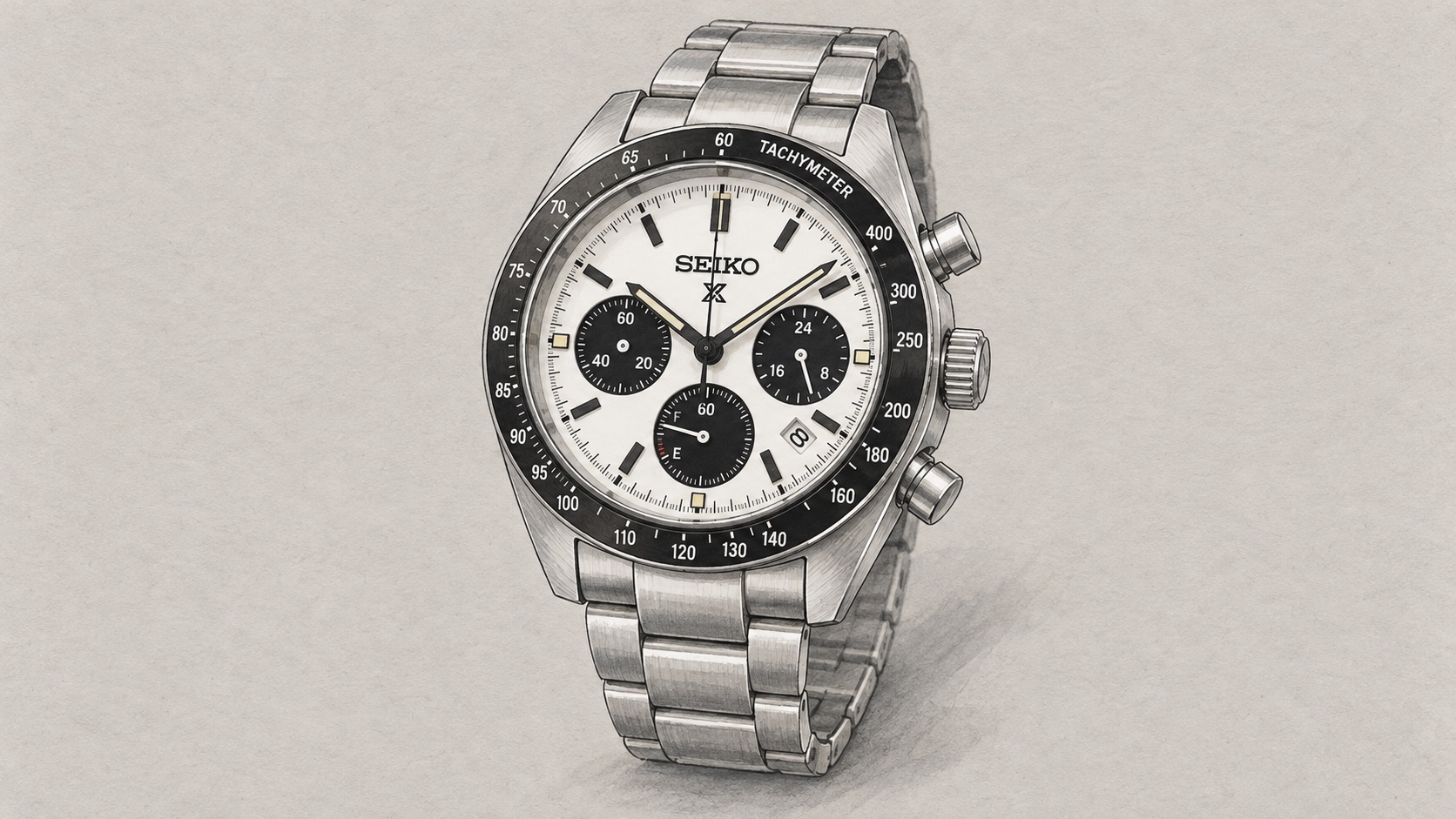
| Seiko Speedtimer SSC813P1 | V192 solar quartz; 39 mm × 13.3 mm | Fixed outer scale; central stopwatch hand |
| Tudor Black Bay Chrono M79360N-0014 | MT5813 automatic; 41 mm × 14.4 mm | Black aluminium tachymeter insert; screw-down pushers |
The Seiko combines a light-powered movement with a relatively compact case. The Tudor adds a mechanical chronograph, an approximately 70-hour reserve and a five-link steel bracelet in this reference. Those are substantial ownership differences, but neither changes the arithmetic printed around the dial. A more expensive movement does not make 3,600 divided by 30 a different number.
Before timing, identify the stopwatch seconds hand. A small seconds display may keep moving while the chronograph is stopped. Start, stop and reset using the model’s instructions, including unlocking screw-down pushers where specified. Confirm that the chronograph returns to its proper zero position; a displaced starting point makes the scale misleading.
Why the scale has limits
A conventional single-turn tachymeter is arranged around the seconds hand’s first circuit. Very short intervals may fall outside the printed range, while a cycle lasting longer than a minute cannot usually be read directly in the same way. Some watches use special extended scales. Check the actual design rather than assuming that every tachymeter covers every duration.
Human reaction time and the accuracy of your distance markers also matter. Timing a moving object by eye does not turn the watch into a laboratory instrument. For casual demonstrations, the attraction is understanding and using the mechanism. For measurements that require dependable precision, choose equipment designed for that task.
A sporting detail with a longer story
Tudor introduced its first chronograph, the Oysterdate, in 1970. Today’s Black Bay Chrono brings that sporting strand together with the brand’s diving-watch appearance, including the Snowflake hour hand. Its bezel therefore does more than frame the dial: it signals a different purpose from the elapsed-minute ring on a Black Bay diver. The current watch is a modern interpretation, with a movement and bracelet that should be assessed on their own merits.
That distinction is useful when shopping. A diving bezel, a GMT bezel and a tachymeter may all surround a round watch, but they answer different questions. Choose the tachymeter if timing a known unit appeals to you. If you mostly want to see how long dinner has been cooking, the chronograph’s elapsed-time display is the part you will probably use most.
Based on manufacturer information. Specifications and sources checked on 8 September 2026.
Sources: Seiko UK boutique SSC813P1; Seiko Speedtimer solar design and history; Seiko SSC813 technical specifications; Black Bay Chrono opaline specifications; Black Bay Chrono movement and history; Seiko tachymeter instructions.
Image: AI-generated editorial illustration of the Seiko SSC813P1. Design details are approximate; this is not a product photograph.