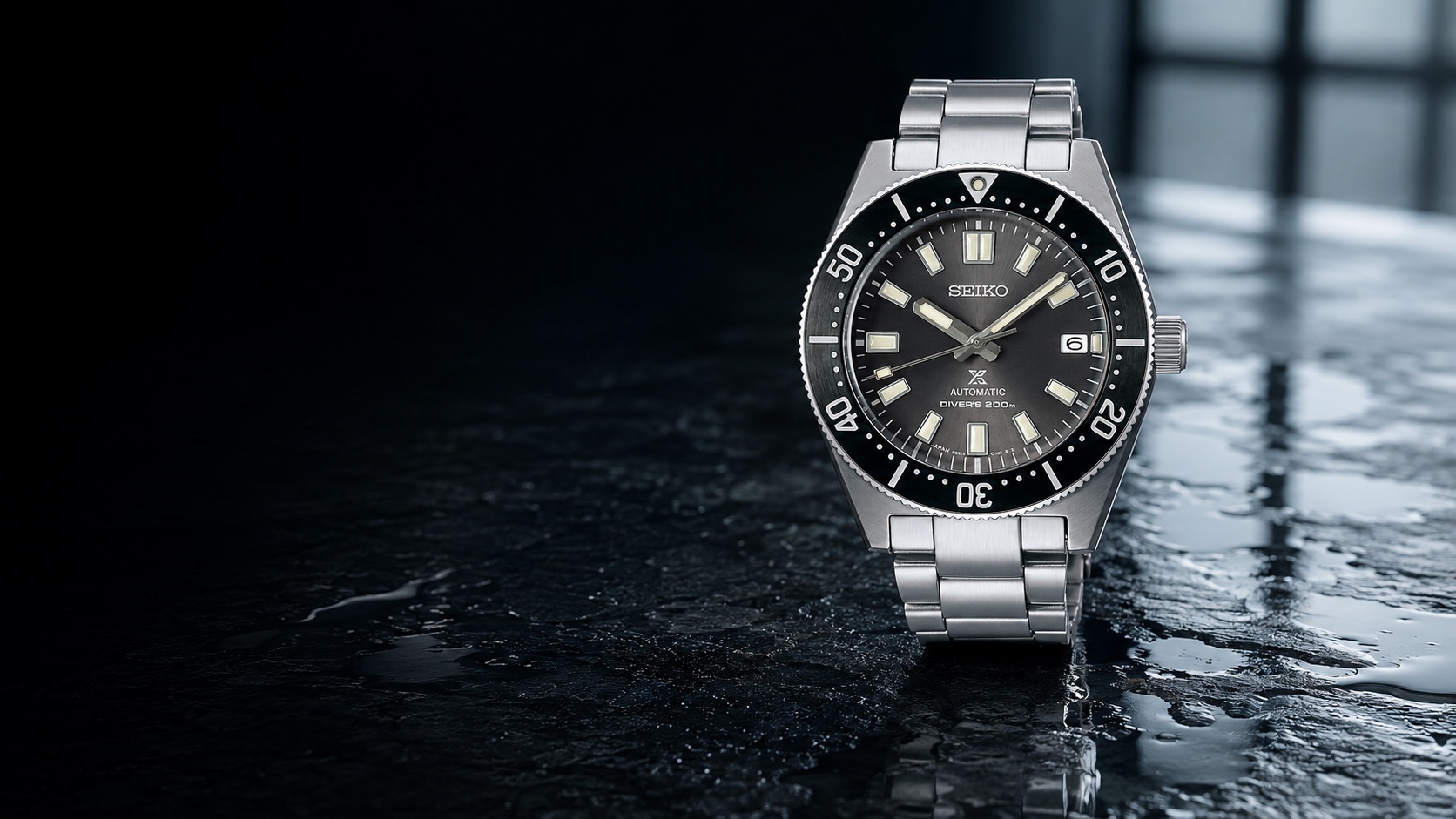
Research-based buying guide. Prepared from the manufacturer sources linked below, checked on 7 September 2026. We have not conducted a hands-on test for this article. The featured image is an AI composition based on the manufacturer’s product photograph, not a photograph taken during hands-on testing.
The short verdict
The SPB143 makes sense if you want a steel mechanical diver with a restrained grey dial and a conventional bracelet. Its appeal is the combination: a comparatively compact case, a useful elapsed-time bezel and a design that is easy to wear with ordinary clothes. It is less convincing if your priorities are low weight, quartz-like timekeeping or the thinnest possible watch.
Those are buying considerations drawn from the published specifications. Comfort, bezel feel and the performance of an individual movement still need checking on the actual example you buy.
The reference and the numbers
This guide covers SPB143J1. Seiko’s specification page is the source for the figures below. The official Singapore boutique identifies the dial as grey.
| Specification | SPB143J1 |
|---|---|
| Case | Stainless steel; 40.5mm diameter, 13.2mm thick |
| Lug-to-lug / strap width | 47.6mm / 20mm |
| Movement | Automatic 6R35, with hand-winding and stop-seconds |
| Power reserve | Approximately 70 hours |
| Published accuracy | −15 to +25 seconds per day |
| Crystal / water resistance | Curved sapphire / diver’s 200m rating |
| Published weight | 180g |
Why fit matters more than the diameter
A 40.5mm diameter is only the starting point. The 47.6mm length and 13.2mm thickness deserve equal attention: the former affects how the lugs sit across your wrist, while the latter affects clearance beneath a cuff. Try the watch with the bracelet sized properly. A loosely fitted bracelet can make a watch feel heavier and less settled than it will be in normal use.
The 180g published weight is a useful warning for someone moving from a light resin or titanium watch. Conversely, a buyer who likes a substantial steel watch may see that as part of the attraction. Neither preference is wrong. Ask to compare it with a lighter watch before deciding that heft automatically means quality.
Understand the 6R35 before buying
The roughly 70-hour reserve gives some flexibility when rotating between watches. It is not a guarantee that a lightly worn watch has reached full charge. The published accuracy range is also a specification, not a measurement from our own sample. A retailer’s regulated example may perform differently, but obtain any specific accuracy promise in writing rather than treating an enthusiast’s result as a guarantee for every watch.
If regular resetting would annoy you, a quartz watch deserves a place on the shortlist. If you enjoy a mechanical movement and accept its maintenance needs, the reserve and hand-winding function make the SPB143 a straightforward proposition.
What to check on the actual watch
- Check that the dial, bezel and reference match the listing. Closely related Seiko variants can look similar in compressed photographs.
- Inspect bezel alignment, clasp operation and bracelet sizing in person where possible.
- For a used watch, ask about service history, missing bracelet links and the most recent water-resistance test.
- Before water use, follow the manufacturer’s instructions and have the condition of seals assessed when appropriate. A rating on a specification sheet does not establish the present condition of a used watch.
We have not verified a current UK retail quotation for this reference, so this guide does not invent one. Compare the complete delivered price, warranty, return terms and condition. Start with the official product page and its retailer route.
A useful comparison
If weight and movement technology interest you more than a diving bezel, read our Grand Seiko Snowflake guide. It occupies a different price bracket and is not a substitute dive watch, but it makes the trade between steel, titanium and different approaches to timekeeping easier to understand.
Our recommendation: shortlist the SPB143 for its dimensions and straightforward diver layout, then decide on fit, condition and price. It does not need exaggerated testing stories to be worth considering.
Correction, 8 September 2026: this guide replaces earlier incorrect dimensions and dial details. Unsupported claims of six months of testing and measured accuracy have been removed.