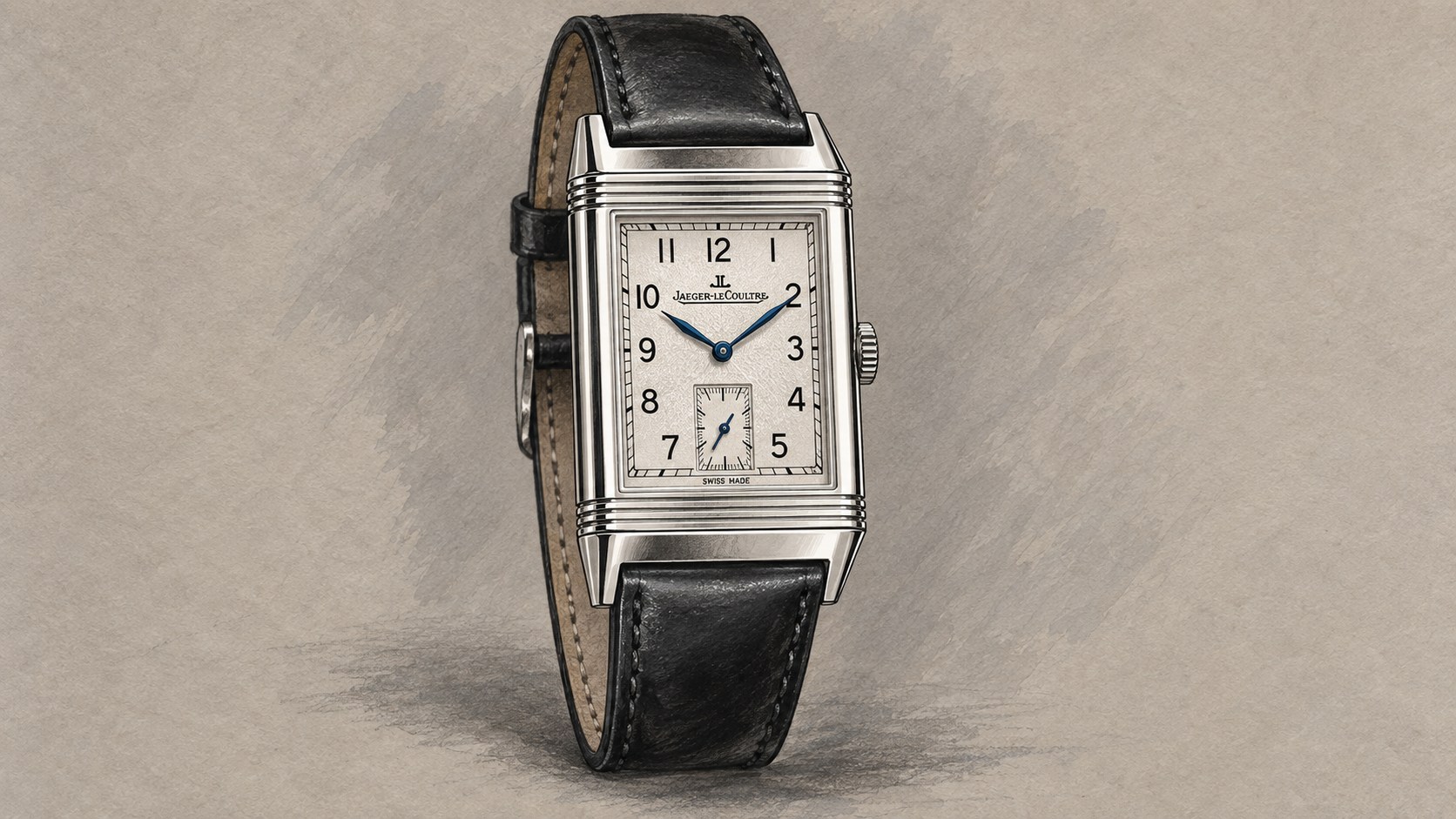
A Reverso is easy to misjudge if you look only at its width. The current Classic Monoface Small Seconds Q3858524 is 27.4mm across, but its complete length reaches 45.6mm. The rectangle and its surrounding cradle establish a very different presence from a round watch carrying a similar-looking size number.
The useful decision is therefore about proportion, not whether Large sounds correct. This reference combines a textured silver-grey dial, small seconds and manual winding with the signature reversible case. Choose it when the complete rectangle gives those details the space you want, and compare smaller examples as different compositions rather than lesser versions of the same watch.
The history behind the choice
The Reverso emerged from a 1930 challenge to protect a watch crystal during polo. The design could slide within a supporting cradle and turn over, placing a metal surface outward. A patent application followed in March 1931, and watches were on sale later that year. The reverse soon became a place for personal engraving as well as a protective surface. That history explains why the modern Reverso is more than a rectangular dial in an ordinary case. Its surrounding structure is essential to the concept. The Classic line retains the Arabic-numeral and decorative vocabulary associated with later 1930s Reversos, while present-day references offer different sizes and functions. The historical mechanism gives all those choices a shared identity.
The exact reference
| Specification | Published detail |
|---|---|
| Reference | Q3858524 |
| Case | Stainless steel; reversible Monoface |
| Dimensions | 45.6mm lug-to-lug; 27.4mm wide; 8.51mm thick |
| Dial | Silvered grey; guilloché and vertical brushing |
| Display | Hours; minutes; small seconds |
| Movement | Manual calibre 822 |
| Reserve / frequency | 42 hours / 3Hz |
| Water resistance | 3 bar |
| Strap | Black Fagliano Collection calfskin; quick release |
| Lug width / buckle | 20mm / steel pin buckle |
Length is the measurement to read first
Jaeger-LeCoultre explicitly identifies the 45.6mm dimension as lug-to-lug length. The 27.4mm width describes the other axis, and the thickness adds a third consideration. Together they describe the object far more usefully than trying to convert it into one equivalent round diameter.
During a fitting, look at the full case and cradle, including the ends where the strap begins. A photograph cropped closely around the dial can make the proportions misleading. The right judgement is whether the long rectangle has the balance you want on your wrist. Once that is established, the collection’s size label becomes a convenient description rather than the basis of the decision.
The older medium is a real alternative with a status difference
The archived Q2438522 measures 42.9 by 25.5mm and is thinner than the large reference. Its smaller dimensions change the complete rectangle rather than reducing only the visible face. It also supplies a useful comparison because it shares the broad Classic Small Seconds idea.
Jaeger-LeCoultre now marks that medium reference as out of collection. It should therefore be considered through the appropriate remaining-stock or pre-owned route, rather than presented as a guaranteed current boutique option. This is a good example of why an exact reference matters in a size guide: two watches can look closely related in pictures while differing in dimensions, supplied strap and present collection status.
The dial repeats the case’s geometry
The silver-grey face combines guilloché with vertical brushing, giving the rectangle more than one surface to inspect. Arabic numerals provide the hour structure, and the small seconds sits within its own defined area. Those details reinforce the ordered character of the Classic rather than introducing a radically different shape inside the case.
This is where the Classic differs in emphasis from a more minimal Reverso Tribute. The extra texture and numeral vocabulary should be part of the attraction. If you prefer a simpler face with applied markers and stronger expanses of colour, another Reverso line may suit you better even if the case dimensions appear promising. Choosing the right rectangle also means choosing the right dial within it.
Monoface leaves the reverse to the metal
This is a Monoface watch: the reversing action does not reveal a second time-zone dial. That absence preserves the relationship to the original metal-backed concept and leaves a different kind of surface on the other side. Buyers who want two working faces should identify a Duoface reference instead.
It is a meaningful distinction because the reversible case can suggest an extra complication to someone seeing it for the first time. On this model, the case mechanism itself is the interactive feature. Its appeal need not depend on a second display; the act of turning the case and the contrast between its two sides can be sufficient reasons to prefer it to an ordinary fixed rectangle.
Manual winding suits the limited display
Calibre 822 drives hours, minutes and small seconds, with a stated forty-two-hour reserve. The small seconds gives the otherwise ordered face a modest source of motion. There is no date window or automatic-winding specification to turn it into a different everyday-watch brief.
Choose Q3858524 when its long proportions, textured dial and manually wound mechanism make the Classic feel complete. Consider the older medium only with its collection status understood, and compare a Tribute or Duoface when the desired change is actually in dial style or functions. The strongest Reverso choice is the one whose whole rectangle you prefer, including the cradle that makes it a Reverso, rather than the one whose size name seems easiest to justify.
Specifications and sources checked on 8 September 2026. Current Reverso Classic Large specifications; Older medium Q2438522 specifications and status; Reverso design and 1931 history.
Image: AI-generated editorial illustration of the Jaeger-LeCoultre Q3858524. Fine dial details and finishing may differ from the production watch.


