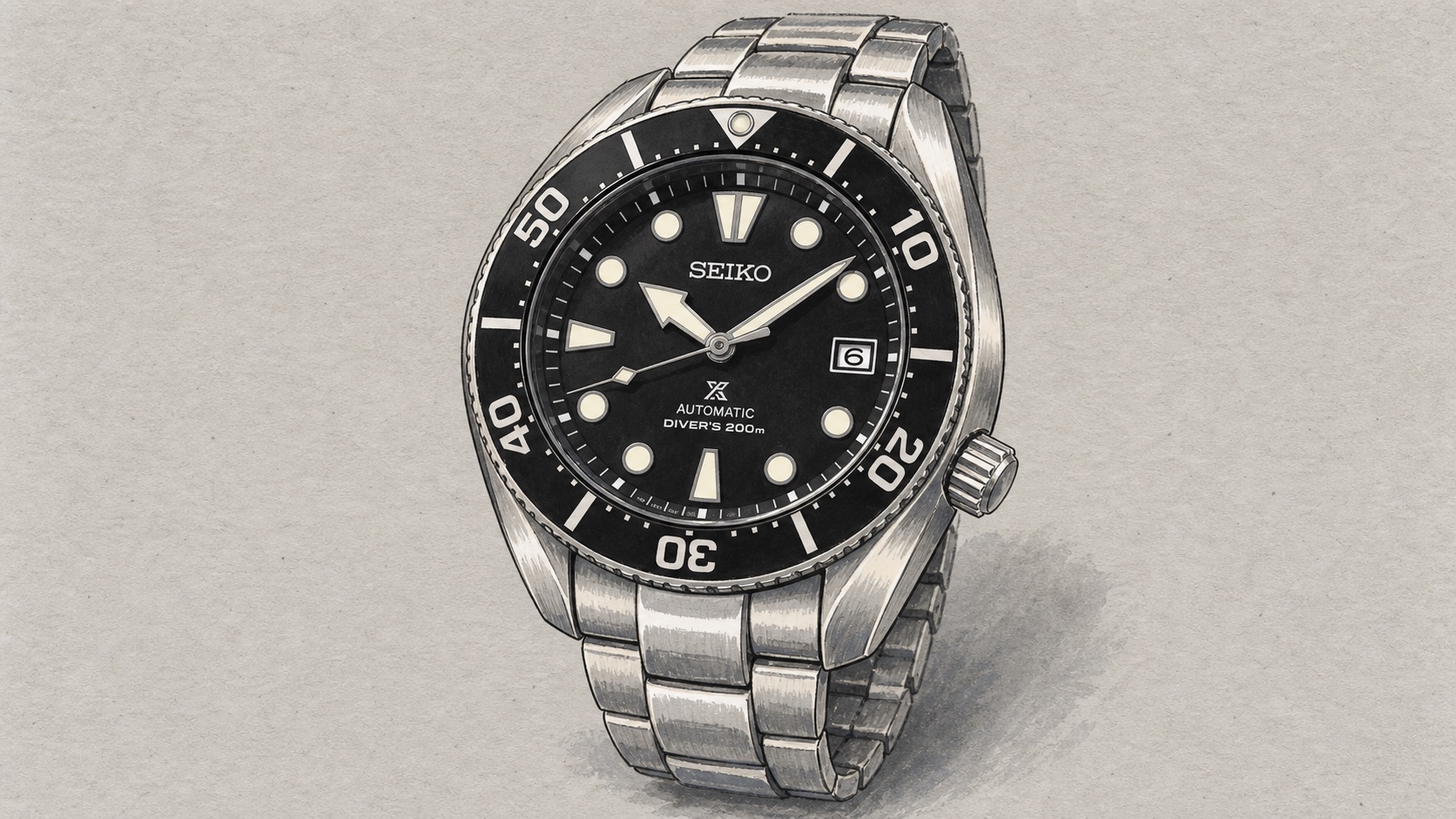
A shared forty-five-millimetre diameter makes the Sumo and Turtle look closer on paper than they are as complete watches. The SPB101 is a steel-bracelet diver with long, clearly defined lugs and sapphire. The SRPE93 spreads a cushion case around its dial and arrives on silicone.
The Sumo also has a much longer stated reserve. Choose it if that duration, sapphire and bracelet are the features you want alongside its case shape. Choose the Turtle if the cushion form, day-date display and silicone attachment are the more appealing package. Neither watch becomes a small diver simply because its nickname is familiar.
The references compared
| Feature | Sumo SPB101 | Turtle SRPE93 |
|---|---|---|
| Reference | SPB101J1 | SRPE93K1 |
| Diameter / thickness | 45mm / 12.9mm | 45mm / 13.4mm |
| Lug-to-lug | 52.6mm | Not listed on cited UK page |
| Movement | Automatic 6R35 | Automatic 4R36 |
| Reserve | Approximately 70 hours | Approximately 41 hours |
| Calendar | Date | Day and date |
| Crystal | Sapphire | Hardlex |
| Attachment | Steel bracelet | Silicone strap |
| Published weight | 188g | 124g |
| Water resistance | 200m diver | 200m diver |
Two histories behind the decision
Seiko dates the first Sumo to 2007 and credits enthusiasts with the nickname, while acknowledging more than one explanation for its origin. Its later generations developed different materials and bracelet details, making the exact reference important. The Turtle follows a longer cushion-case story. Seiko describes its 1970 diver as an ancestor of the Turtle and separately records later 1970s diving models. That distinction prevents the current SRPE93 from being presented as a literal copy of one historical reference. The comparison is therefore between two continuing case-design ideas: the Sumo’s muscular lugs and the Turtle’s broader protective cushion. Their shared modern diver rating does not erase the different silhouettes which made the families recognisable.
The Sumo makes more of its lugs
Seiko publishes a fifty-two-point-six-millimetre lug-to-lug measurement for SPB101. That reach matters alongside its broad diameter. The case’s projecting lugs and steel bracelet produce a different outline from the Turtle’s cushion and silicone strap.
The cited SRPE93 UK page does not publish a lug-to-lug figure, so borrowing one from a similar Turtle would add false precision. Compare the actual complete watches, including how the attachments turn down from the cases. The shared diameter is useful for establishing that both are broad designs. It is not evidence that they will fit identically or that one will automatically disappear on a smaller wrist.
Seventy hours changes the time off the wrist
The Sumo’s 6R35 offers approximately seventy hours of reserve, against roughly forty-one from the Turtle’s 4R36. That is a substantial difference if the watch will regularly be set aside while another is worn. The longer duration can make it easier to return to a running watch after a pause.
The Turtle adds a day indication alongside the date, while the Sumo supplies the date alone. A buyer who regularly checks the weekday may appreciate that extra information more than the longer reserve. These are different kinds of usefulness, and neither should be hidden behind a claim that one movement is simply higher in a hierarchy.
The crystal and attachment provide clear package differences
The SPB101 uses sapphire, while the SRPE93 uses Hardlex. The Sumo’s steel bracelet also contributes to its higher listed complete weight: 188g compared with the Turtle’s 124g on silicone. That weight comparison describes the supplied configurations, not the cases in isolation.
If you want the feeling and appearance of a substantial bracelet diver, the Sumo is offering it directly. If you prefer a flexible silicone attachment, the Turtle’s original package is more relevant. Neither difference is merely an accessory decision made after buying the watch. The attachment helps define the complete object and should be part of the initial choice.
Keep later Sumo specifications out of this comparison
Seiko’s later Sumo documentation describes changes such as ceramic bezel material and additional case treatments on newer generations. Those features should not be silently transferred to SPB101 because the family nickname remains the same. The exact reference matters just as much when comparing used examples with current stock.
Choose the SPB101 when its sapphire, long reserve, steel bracelet and muscular case are the reasons for wanting a Sumo. Choose the SRPE93 when the cushion silhouette, day-date display and silicone strap form the Turtle you want to wear. Both are rated two-hundred-metre divers, so that shared figure does little to decide the purchase. Their different shapes and packages already provide more useful reasons to choose.
Specifications and sources checked on 8 September 2026. SPB101 exact specifications; Sumo history and later generations; SRPE93 exact specifications; Seiko cushion-case history; Seiko diving timeline.
Image: AI-generated editorial illustration of the Seiko SPB101J1. Design details are approximate; this is not a product photograph.


