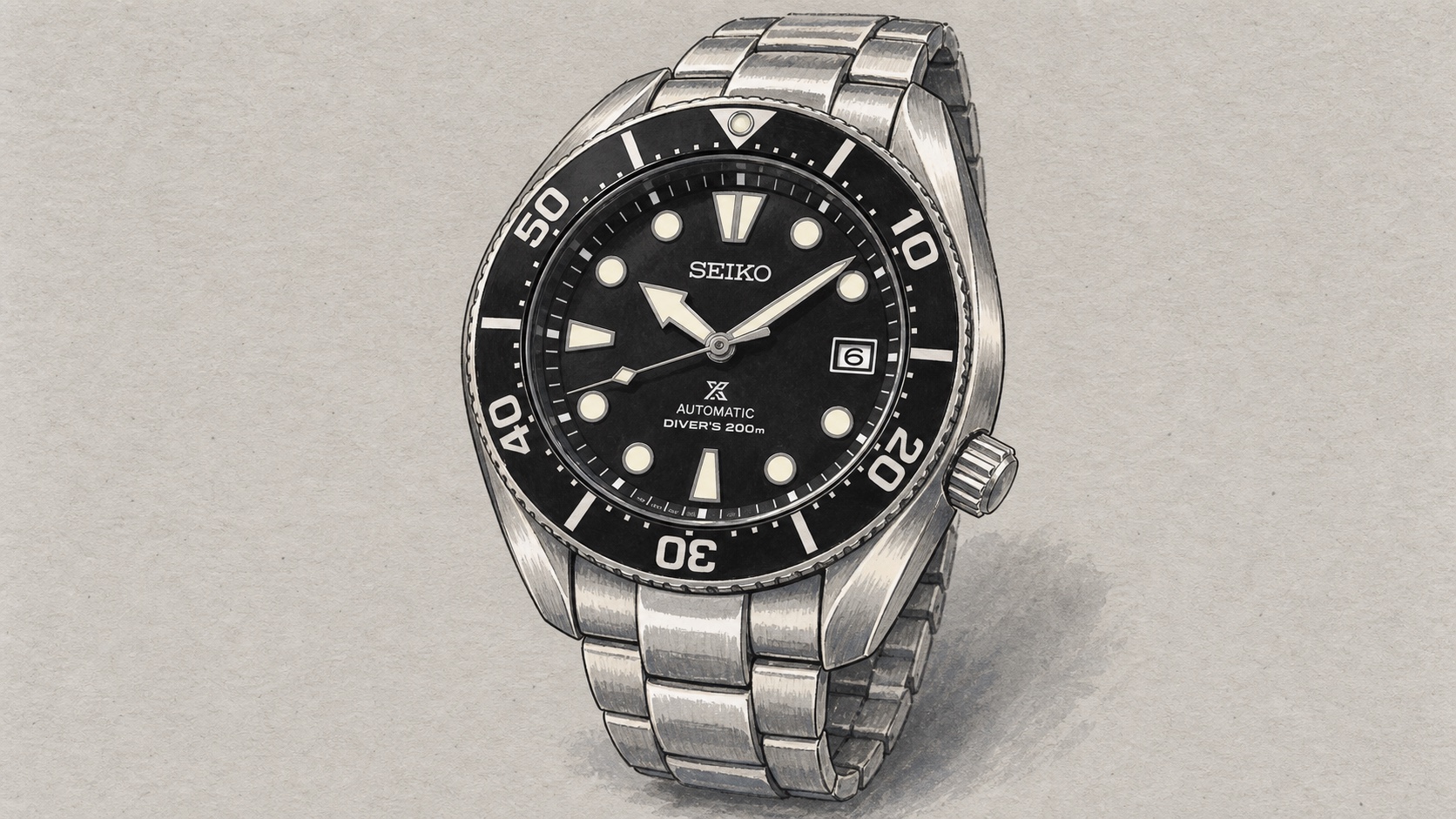
A 6.5-inch wrist measurement cannot settle the Sumo question. The SPB101’s 45 mm diameter attracts the attention, but its 52.6 mm lug-to-lug length is the measurement most likely to decide the fit. Those lugs have to sit somewhere, regardless of how enthusiastically a seller describes the case.
This black-dial Sumo can be a compelling choice if you enjoy a substantial steel diver and want a longer reserve than Seiko’s basic automatic movements provide. The decision needs two checks: whether the proportions suit you, and whether you are buying the exact generation whose features you expect. The Sumo name covers more than one specification.
Based on Seiko’s published information. Specifications checked on 8 September 2026.
The exact reference
| Movement | 6R35 automatic; manual winding; stop seconds |
|---|---|
| Reserve | Approximately 70 hours |
| Rated accuracy | −15 to +25 seconds per day |
| Case | Steel; 45.0 mm diameter; 12.9 mm thick |
| Lug-to-lug | 52.6 mm |
| Lug width | 20 mm |
| Weight | 188 g |
| Crystal | Sapphire |
| Water resistance | 200 m diver’s watch |
| Bracelet clasp | Secure-lock clasp with push-button release and extender |
| UK listed price | £780, checked 8 September 2026 |
Specification source: Seiko UK SPB101J1.
A nickname that outlived one specification
Seiko’s Sumo brochure dates the first model to 2007 and credits enthusiasts with the nickname. It offers possible explanations involving the watch’s muscular appearance and the shape associated with a sumo ring, rather than establishing a single certain origin. The nickname subsequently became a convenient way to recognise a continuing design family.
The same brochure documents a later 2022 generation with a ceramic bezel, a super-hard case coating and changes to the bracelet. Those later details should not be silently transferred to the SPB101 discussed here. Family history is useful precisely because it exposes the difference between generations. Read the official Sumo brochure as a record of development, then use the exact-reference table for the watch you are considering.
Measure reach, then try the bracelet
The 52.6 mm span describes the case from one end of the lugs to the other. It does not include every effect of the end links or tell you the shape of your own wrist. Two wrists with the same circumference can present different amounts of flat surface to a watch, which is why a yes-or-no answer based on inches alone would be unreliable.
If you already own a watch with a known lug span, compare it with the Sumo in that dimension first. Then put the actual watch on. Check whether the lug tips approach the point where your wrist falls away and whether the first bracelet links can turn down naturally. Look from the side as well as straight above.
A loose bracelet makes this assessment worse because the watch can slide into an unnatural position. Ask for a realistic fit and move your hand normally. The test is not whether you can take a flattering photograph, but whether the size is welcome during a normal day.
The weight is part of the purchase
Seiko lists 188 g in the supplied configuration. That is useful context for someone moving from a lightweight watch, although resizing the bracelet changes the figure. A broad case and a substantial bracelet create a different sensation from a similar diameter watch on a fabric strap. Published grams cannot establish which you will prefer.
The 20 mm lug spacing also matters aesthetically. The bracelet is relatively narrow against the broad case, giving the case more visual emphasis. That proportion may be part of the appeal, or it may make the watch look unbalanced to you. Consider it before assuming that any 45 mm diver will give the same effect.
The clasp includes an extender, but an extender is not evidence of fine everyday adjustment. Check the actual clasp and available sizing positions. A specification list naming an extension feature does not tell you how closely it will fit your wrist between standard link lengths.
What the 6R35 changes in daily use
A fully wound reserve of approximately 70 hours can cover a typical weekend break with some room to spare. That makes the SPB101 relevant to a weekday wearer who dislikes restarting a watch on Monday. It still depends on taking the watch off with enough stored energy, rather than simply owning a movement with the larger advertised number.
Seiko’s rated daily accuracy is 15 seconds slow to 25 seconds fast. Treat that separately from the useful reserve. The movement offers more running time than a basic 41-hour automatic, but the purchase should not rest on an expectation of near-quartz accuracy.
Manual winding and stop seconds help when the watch does need starting and setting. The date-only layout also avoids managing a day display. These are small practical details, but repeated over years they can matter more than a feature you use once to demonstrate the watch.
Be precise about the generation
The SPB101’s cited specification includes sapphire, a steel case, a unidirectional bezel and Seiko’s 200-metre diver designation. It does not list the later ceramic bezel or super-hard coating. If a retailer’s Sumo description promises those later upgrades, ask which reference is actually for sale before comparing prices.
This distinction is especially important with remaining stock or used watches. A photograph of a black-dial Sumo and a family name are not enough identification. Obtain the exact reference, photographs of the actual item and a clear description of any replacement components.
If size is the obstacle, the SPB453J1 gives a useful alternative within Seiko: 40 mm diameter and 46.4 mm lug-to-lug. It changes both the footprint and the design character. The right comparison is the watch that meets your priorities, rather than the largest discount on a familiar nickname.
The verdict for a smaller wrist
The SPB101 is worth trying if you actively like a broad steel diver, but its long case span makes an unqualified recommendation for a 6.5-inch wrist inappropriate. Let the actual lug and bracelet position decide.
Choose it when the substantial proportions, straightforward dial and longer reserve all serve your routine. Pass when you need the watch to be unobtrusive or when you specifically want the later-generation materials. Seiko’s official UK listed £780, checked on 8 September 2026, buys this reference and this specification, not every feature ever attached to the Sumo name.
Image: AI-generated editorial illustration of the Seiko SPB101J1. Design details are approximate; this is not a product photograph.


