A formal watch does not need to be the most anonymous object in the room. It needs to contribute the amount of detail you want beside a cuff. These three watches all keep the display simple, yet they make distinctly different choices about colour, texture and size.
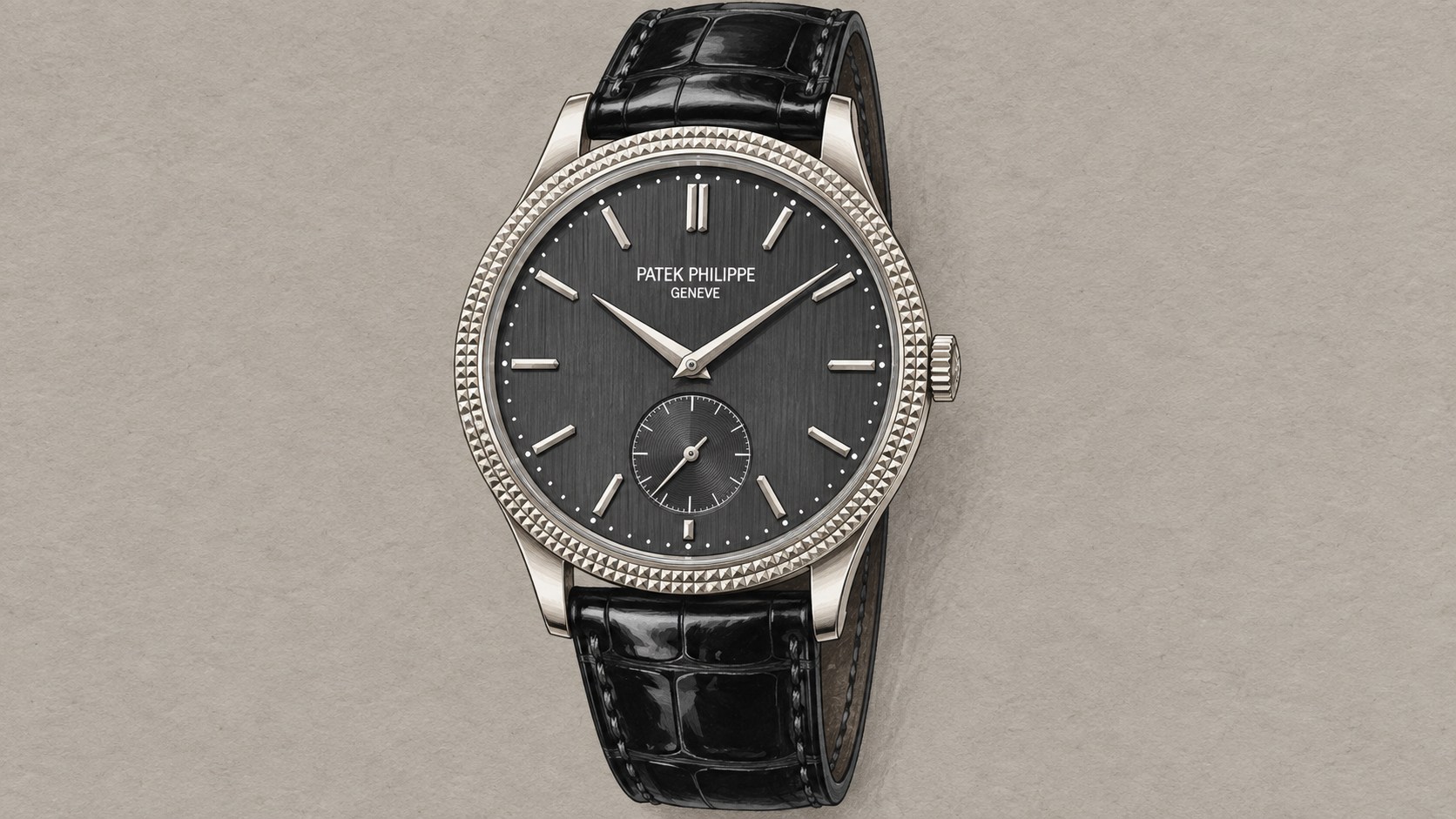
The Patek Philippe Calatrava 6119G adds a hobnail bezel and small seconds. The A. Lange & Söhne Saxonia Thin 201.027 reduces the face to two hands inside the smallest case here. The Vacheron Constantin Patrimony 81180/000R-B518 combines pink gold with midnight blue. Decide which of those details feels intentional with your clothes before treating thinness as the entire brief.
Three precise interpretations of a dress watch
| Watch and reference | Case | Thickness | Display | Reserve |
|---|---|---|---|---|
| Patek Philippe 6119G-001 | 39mm white gold | 8.08mm | Hours, minutes, small seconds | Minimum 65h |
| Lange Saxonia Thin 201.027 | 37mm white gold | 5.9mm | Hours and minutes | 72h |
| Vacheron Patrimony 81180/000R-B518 | 40mm pink gold | 6.79mm | Hours and minutes | About 38h |
All three use manually wound movements and alligator straps. Their reserve figures therefore describe capacity after sufficient winding, not a reason to expect months of readiness between formal occasions. No unverified GBP price comparison is used to turn these different configurations into a value ranking.
Simplicity has been developed, not merely preserved
Patek Philippe introduced the 6119 in 2021, connecting its applied markers to earlier Calatravas while reworking the lugs, proportions and movement. Lange’s Saxonia Thin first appeared in 2011 as a modern two-hand expression of its watchmaking. The Patrimony collection explores restraint through its own round-case and dial language. These are contemporary interpretations of formal-watch design. Their interest comes from how each maker arranges a few visible elements, rather than a requirement that every dress watch reproduce the same historical formula.
The Saxonia puts low height first
At 5.9mm thick and 37mm across, the Saxonia Thin is the most promising starting point if your priority is a low profile beside a fitted sleeve. Its argenté solid-silver dial and white-gold case keep the colour treatment restrained, with no calendar or seconds display competing for space.
That sparseness needs to appeal on its own. If you enjoy watching a seconds hand or checking a date, removing those functions may feel like a loss rather than elegance. The manually wound L093.1 remains visible through the sapphire back, supplying mechanical interest without adding information to the front.
The Calatrava makes the bezel part of the occasion
The 6119G is wider at 39mm and thicker at 8.08mm, while remaining a comparatively modest vertical object. Its charcoal-grey dial has a vertical satin finish, and the hobnail pattern around the bezel supplies small points of detail. The watch is simple to read without being visually empty.
The small-seconds display at six is another important difference. It gives the dial a visible sign of the movement’s activity and changes the balance of the lower half. Choose it because you like that arrangement, rather than assuming a two-hand watch is automatically more appropriate for formal clothes.
The Patrimony introduces colour through material
The exact Vacheron reference here is pink gold with a midnight-blue dial and dark-blue alligator strap. That combination is warmer and more visibly coloured than the two white-gold alternatives. It may suit someone who wants the watch to feel like a deliberate accessory, even with only two hands on the face.
Its 40mm diameter and 6.79mm thickness combine a broad dial with a slim profile. Those dimensions should be tried together. A low case can slip under a cuff while still having more visual presence when exposed than a smaller watch with a busier bezel.
Think about the morning after the event
The Saxonia’s stated reserve is 72 hours, the Patek’s minimum 65 hours and the Patrimony’s approximately 38. If you wear the watch beyond special occasions, those differences affect how often a short break leaves it stopped. For genuinely occasional use, all three will usually require winding and setting before you leave.
Make that part of your preparation rather than discovering it while dressing. Have the correct winding method demonstrated, and choose an appropriate strap length before the event. A thin watch still needs its buckle and leather to sit comfortably at your preferred tightness.
Choose detail you actually enjoy
The published water ratings are modest, and the leather straps give these watches a clear role away from prolonged soaking. That is an ordinary compromise for a formal purchase, particularly if another watch handles your swimming or outdoor routine.
Choose the Saxonia for the smallest, thinnest and quietest face of these three. Choose the Calatrava for its textured bezel and small seconds. Choose the Patrimony for its broad blue dial and pink-gold frame. For an occasion, the strongest decision is the watch that looks and feels right with your own clothes, without needing an invented rule of etiquette to justify it.
Based on manufacturer information. Specifications checked on 8 September 2026.
Sources: Calatrava 6119G specifications; 6119 design development and history; Calibre 30-255 architecture; Saxonia Thin exact specifications; Saxonia Thin design and movement history; Vacheron Constantin Patrimony 81180/000R-B518; Official Patrimony collection.
Image: AI-generated editorial illustration of the Patek Philippe 6119G-001. Fine dial details and finishing may differ from the production watch.


