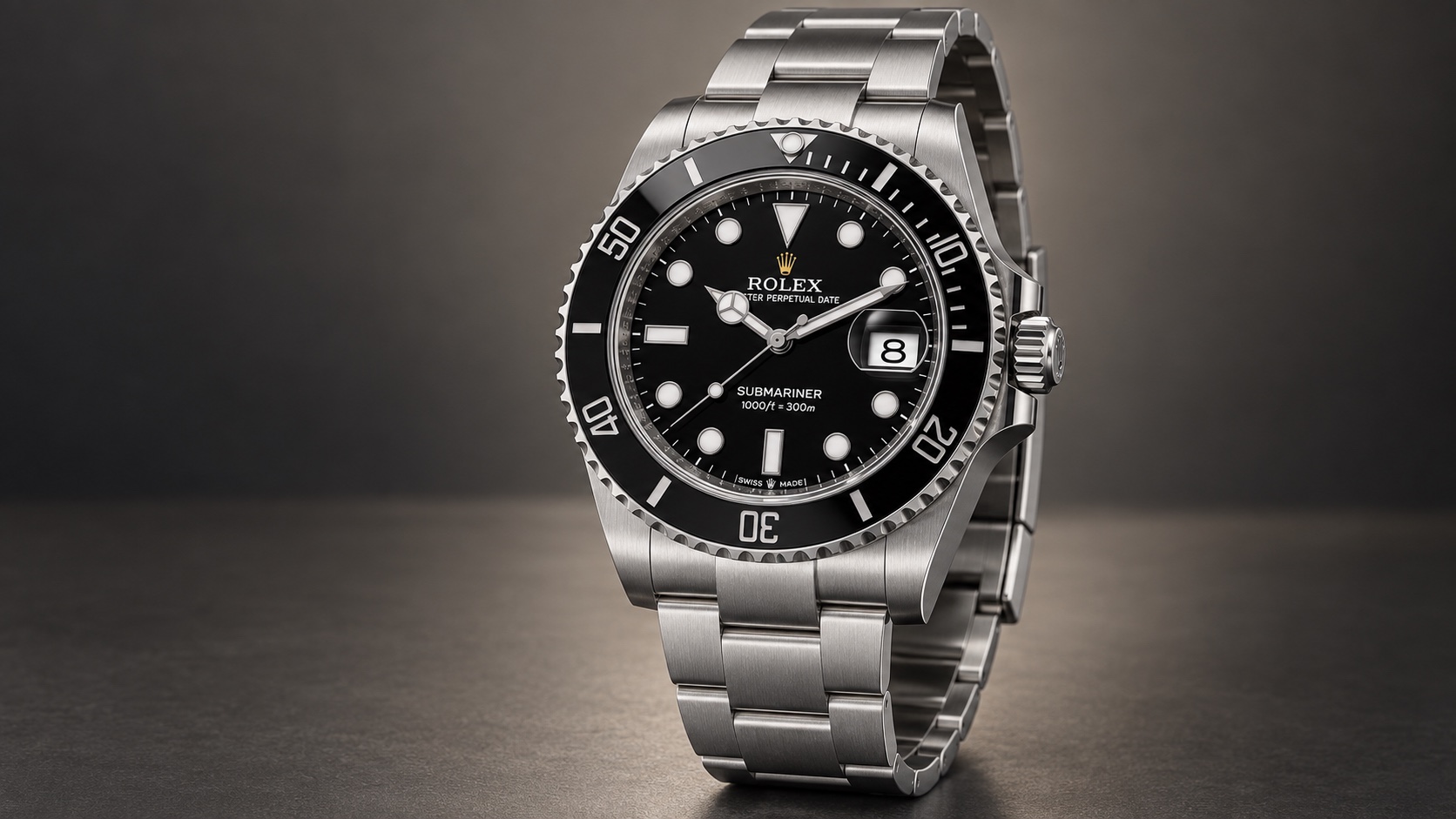
Choosing a ceramic Submariner Date over an older aluminium-bezel watch is not just choosing a shinier ring. It is choosing between generations, with different cases, bracelets and individual histories. A tempting older example may be exactly the watch you want, but a low asking price does not establish that it is the better purchase.
Start with the current black 126610LN as a reference point. Its appeal is a coherent modern package. The older watch makes sense when its particular appearance matters enough for you to investigate the whole example, rather than treating an aluminium insert as a shortcut to vintage character.
The history behind the choice
Rolex launched the Submariner in 1953, initially with a 100-metre rating. Its own current timeline dates the Submariner Date to 1969. That matters because an account of the collection should distinguish the date model from the original time-only diver. Further changes arrived gradually: the Submariner Date case adopted 904L steel in 1985, while the timeline places the green or black ceramic-insert update in 2010. The time-only Submariner followed two years later. These dates explain why “ceramic versus aluminium” is a generational question rather than a simple materials option on one unchanged watch. Today’s reference inherits a long sequence of revisions. An older example belongs to a particular point in that sequence, which is part of its attraction.
The exact reference
| Specification | Published detail |
|---|---|
| Reference | 126610LN-0001 |
| Case | 41mm Oystersteel |
| Dial / bezel | Black / black Cerachrom ceramic insert |
| Bezel operation | Unidirectional, 60-minute scale |
| Movement | Automatic calibre 3235 |
| Stated reserve | Approximately 70 hours |
| Maker precision | −2/+2 seconds per day after casing |
| Water resistance | 300m |
| Crystal | Sapphire with Cyclops date lens |
| Bracelet / clasp | Oyster / Oysterlock with Glidelock |
Decide which appearance you actually prefer
The black ceramic insert gives this reference a crisp, reflective frame. An older aluminium example can offer a different visual balance, especially when its surface has aged. Those are aesthetic observations, not a reliable way to authenticate a watch or establish how it was used. A faded colour is not, by itself, evidence of a desirable history.
Look at ordinary photographs as well as dramatically lit sales images. Decide whether you want the watch to look fresh or whether you specifically enjoy the appearance of age. If the older example interests you only because it appears cheaper, remove the romantic language from the decision and compare the complete purchase. If its shape and finish are what you love, acknowledge that preference rather than trying to prove it wins every specification.
The bracelet is a generational difference
The current Oyster bracelet combines solid three-piece links with an Oysterlock safety clasp and Glidelock adjustment. The last feature allows fine changes without tools. It is an unusually practical part of a watch whose bezel often receives nearly all the attention, and a concrete reason to compare the modern package as a whole.
An older aluminium-bezel example belongs to its own bracelet generation and may now carry replacement components. Identify what is actually fitted before assuming you are comparing the original configurations. The choice is not simply a shiny modern insert against an attractive old one: the clasp and links continue the generational story around the wrist. For an everyday watch, that hidden half of the design can make the modern reference more persuasive than the bezel alone.
The current movement and dial belong together
Calibre 3235 supplies the current watch’s date, automatic winding and approximately seventy-hour reserve. The calendar has rapid setting, while stop-seconds allows the time to be set precisely. These details make the 126610LN a complete modern time-and-date proposition rather than a case whose main technical achievement is its ceramic ring.
The dial also has a clear internal hierarchy. Broad hands and geometric hour markers concentrate attention on the time; the Cyclops draws attention to the calendar. The bezel’s platinum-coated markings supply the surrounding elapsed-time scale. If that magnified date is the element you dislike, compare the time-only Submariner before deciding between materials. Choosing a different generation will not necessarily solve a preference about the basic display.
What to establish before buying an older example
Request clear information about servicing, replacement components and any refinishing. Those details help define the object being offered; they are not automatically reasons to reject it. Someone seeking a dependable daily watch may welcome documented replacement parts, while a collector pursuing a particular original configuration may reach a different conclusion.
Put the seller’s description beside the written terms and any independent inspection you arrange. Leave room in the decision for unresolved questions. There is no sound universal premium to assign to ceramic, aluminium, originality or a box of accessories. The appropriate comparison is the complete quoted cost of each specific example and the degree of confidence you have in it. This guide makes no prediction about future resale prices.
The choice worth making
Choose the 126610LN when you want its present-day design and adjustment features without pursuing a particular older configuration. Choose aluminium when a specific reference’s appearance is the attraction and you are willing to investigate the example carefully. Avoid buying an older watch simply to imitate someone else’s collecting story. The successful purchase is the Submariner you will enjoy looking at and using, with an ownership history you understand well enough to accept.
Specifications and sources checked on 8 September 2026. Rolex 126610LN specifications; Rolex Submariner timeline; Rolex Submariner collection.
Image: AI-generated editorial illustration of the Rolex Submariner Date 126610LN-0001. Fine dial details and finishing may differ from the production watch.


