An everyday quartz watch can be a tiny digital display, a straightforward steel analogue or a carefully engineered luxury watch. The movement category tells you how time is regulated, but says little by itself about the size, materials, functions or amount of attention the watch asks from you.
These five references cover different priorities: light weight, a metal-bracelet digital, a diver-style case, a simple steel analogue and high-accuracy quartz. Choose the job first, then compare the exact watch. There is no need to climb a price ladder if the most modest option already does what you want.
Casio F-91W: keep it light and simple
The F-91W-1XY weighs 21 g and measures 38.2 mm long, 35.2 mm wide and 8.5 mm thick. Its resin case and digital display provide time, calendar, alarm, stopwatch and a small light. Casio states approximately seven years of battery life and ±30 seconds per month. The general Water Resistant marking is not a numerical swimming rating.
Casio dates the F-91W to 1989. Its lasting appeal comes from the compact arrangement of useful functions, rather than expensive materials. It is the clearest choice here if very low weight and a familiar digital layout are the main requirements.
Casio A168: a bracelet and a different light
A168WA-1YES uses a chrome-plated resin case and a steel bracelet. The case is not solid stainless steel, despite the metallic appearance. It weighs 50 g and uses an electroluminescent backlight, with a nominal seven-year battery specification and the same ±30-second monthly accuracy figure.
The A168 arrived in 1995, with the illuminated display and metal bracelet central to its identity. Choose it if you like the small digital format but want a different visual effect from the F-91W’s black resin. As with the F-91W, follow the maker’s general water-resistance guidance rather than assuming a dive rating.
Casio Duro: an analogue diver-style layout
MDV-106-1AV has a 44.2 mm-wide steel case, mineral crystal, resin strap and 200 m rating. It uses battery-powered quartz with a nominal three-year battery life and ±20 seconds per month. The rotating bezel and date make it a much larger, more conventional sports-watch proposition than the two digitals.
The Marlin-marked MDV-106 remains a specific branch of Casio’s analogue water-resistant range, alongside later MDV-107 references. Regional availability and model details differ. Buy the exact reference you intend, rather than assuming every watch called Duro has the same case, dial emblem or specification.
Casio Edifice EFV-100: steel without the diver bezel
The EFV-100D-1AV measures 42 mm wide and 10.9 mm thick, with a steel bracelet, mineral crystal and 100 m rating. Its nominal battery life is three years, and the stated accuracy is ±20 seconds per month. The international page labels it an old model, so assess remaining-stock and used offers accordingly.
Edifice launched in 2000 with metal analogue watches as its core brief. This simple three-hand reference belongs to that history without needing a complex racing display. It is worth considering if you want a steel everyday watch with a date and relatively little visual equipment.
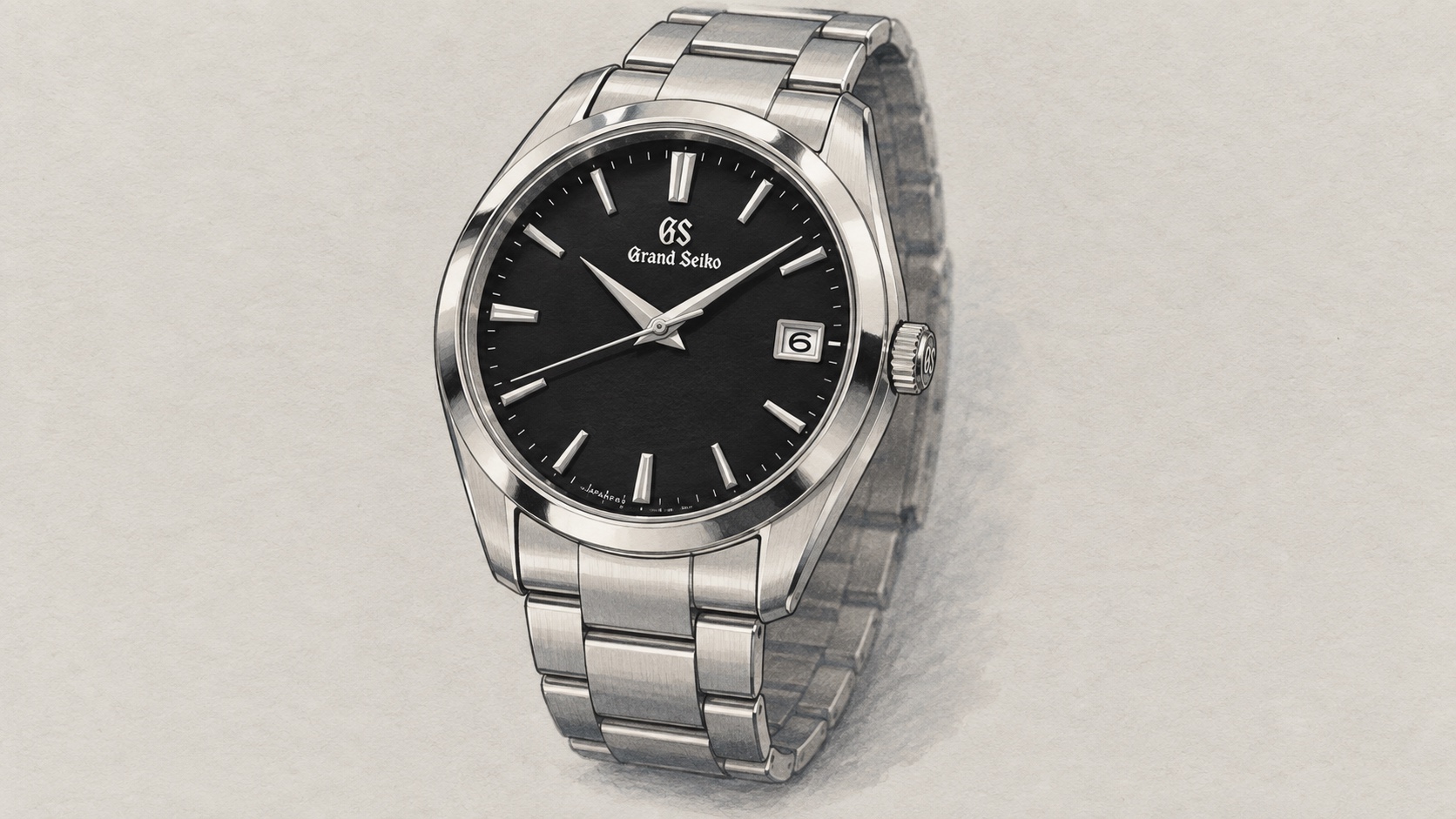
Grand Seiko SBGP011: precision and independent hour adjustment
The 40 mm steel SBGP011 uses calibre 9F85, specified to ±10 seconds per year. Its hour hand can be adjusted independently, useful when changing between whole-hour time zones while preserving the timekeeping sequence. The case is 10.6 mm thick and rated to 10 bar.
Grand Seiko introduced the 9F family in 1993 and the 9F85 in 2020. This is a deliberately developed quartz proposition, not a mechanical watch with a less expensive substitute movement. The UK boutique listed £2,450 and sold-out status at the check, so confirm availability before choosing this exact reference.
| Reference | Size or weight | Main reason to consider it |
|---|---|---|
| F-91W-1XY | 35.2 mm wide; 21 g | Very light digital functions |
| A168WA-1YES | 36.3 mm wide; 50 g | Steel bracelet and EL backlight |
| MDV-106-1AV | 44.2 mm wide; 92 g | Timing bezel and 200 m rating |
| EFV-100D-1AV | 42 mm wide; 125 g | Simple steel analogue |
| SBGP011 | 40 mm diameter; 148 g | 9F85 precision and local-hour adjustment |
Make convenience specific
Quartz removes the regular winding routine, but batteries, seals and straps still need attention. A nominal battery-life figure is not a promise about the remaining charge in an old-stock watch. Have replacement work carried out appropriately, with the relevant sealing checks when water use matters.
Choose the F-91W for weight, the A168 for its bracelet-and-light combination, the Duro for a larger diver-style layout, the Edifice for a simple steel analogue or the Grand Seiko for its particular movement engineering. The useful upgrade is the feature you will notice, rather than a higher price on its own.
Based on manufacturer information. Specifications and sources checked on 8 September 2026.
Sources: Casio UK F-91W; Casio official 1980s watch history; Casio official F-91W overview; Casio UK A168WA-1YES; Casio 1990s history: A168 launch in 1995; Casio water-resistance use guidance; Casio MDV-106-1AV; Casio Japan MDV-107 family development; Casio Edifice EFV-100D-1AV; Casio corporate history: Edifice launch in 2000; Grand Seiko UK boutique SBGP011; Grand Seiko GS9 Club movement history; Grand Seiko calibre 9F85; Grand Seiko Japan SBGP011.
Image: AI-generated editorial illustration of the Grand Seiko SBGP011. Design details are approximate; this is not a product photograph.


